How to Start an Electric Scooter Dealership: A Step-by-Step Plan from Market Check to First Order
·
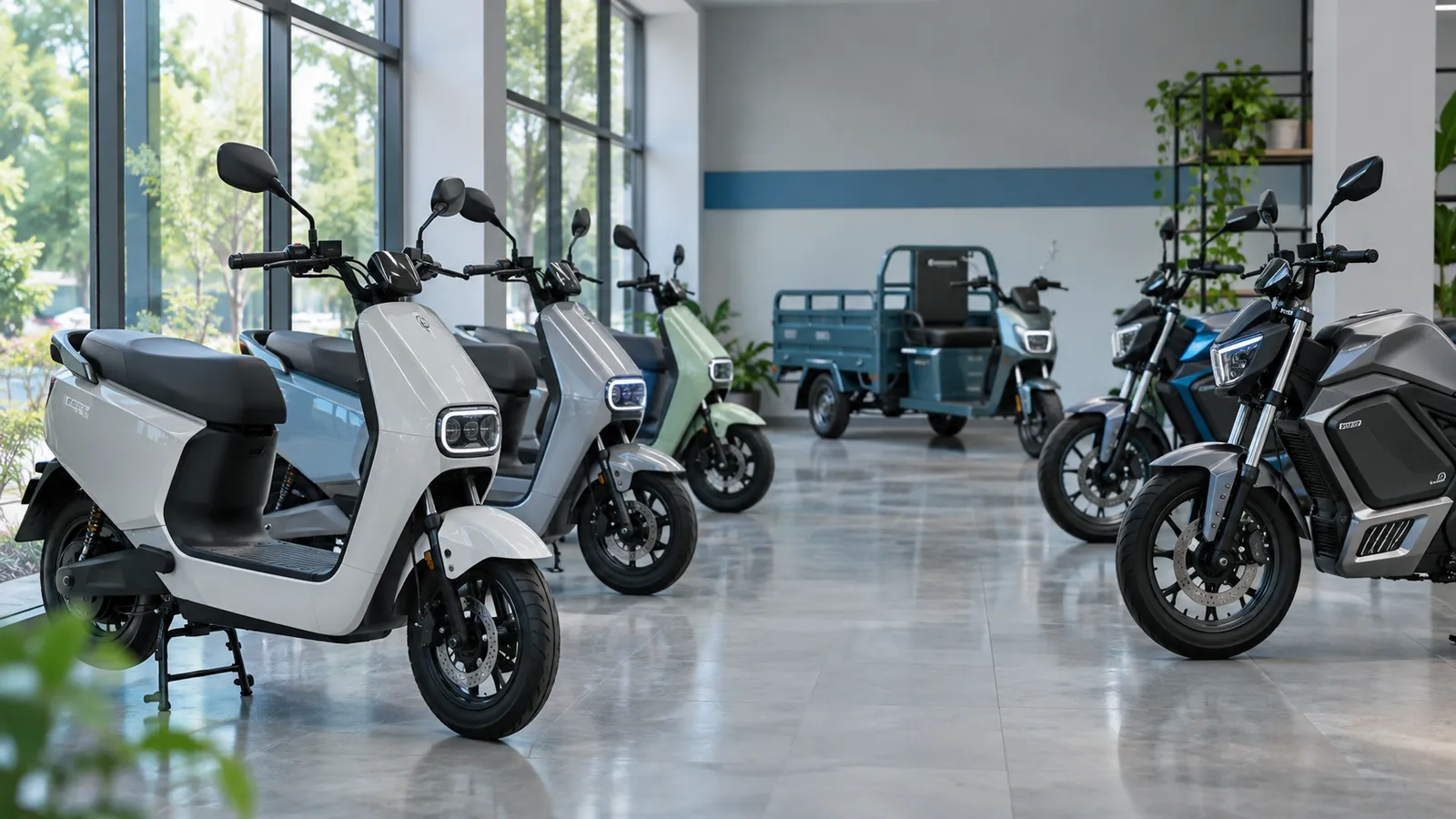
To start an electric scooter dealership, validate local demand and vehicle rules first, then secure licences, a showroom with a service bay, a focused opening range, a spare-parts kit and a supplier you can audit. This step-by-step plan shows the order to do it in and what to check at each stage.
Contents
- Step 1: Is there real demand for electric scooters in your area?
- Step 2: Which licences and vehicle approvals do you need?
- Step 3: What does the showroom and service bay need?
- Step 4: How should you choose your opening range?
- Step 5: Which spare parts and training do you need before opening?
- Step 6: How do you vet a supplier and place your first order?
- How does STARGO work with new dealers?
- Frequently Asked Questions
Key Takeaways
- To start an electric scooter dealership, validate local demand and vehicle rules first, then secure licences, a showroom with a service bay, a focused opening range, a spare-parts kit and a supplier you can audit.
- This step-by-step plan shows the order to do it in and what to check at each stage.
Knowing how to start an electric scooter dealership comes down to sequence: confirm demand and vehicle rules first, then set up the business, showroom and workshop, choose a focused opening range, stock spare parts, and place a first order you can sell through. Dealers who reverse that order — buying stock before checking registration or service needs — usually pay for it in unsold units and warranty disputes.
Quick answer: Start with a market and regulation check, then register the business and any trade licences, secure a showroom with a service bay, choose three or four models that cover distinct price and use bands, prepare a spare-parts kit and a trained technician, vet the supplier, and place a first order sized to your cash flow. STARGO's MOQ is 10 units, including tricycles.
This plan is written for first-time dealers, motorcycle shops adding electric models, and distributors opening new outlets. It is practical rather than theoretical: each step ends with something to check or decide.
Step 1: Is there real demand for electric scooters in your area?
Check demand before anything else, using local evidence rather than global headlines. Global data shows the scale of the segment — the IEA reports electric models held about 15% of global two-wheeler sales in 2024, roughly 10 million units, and that China, India and Southeast Asia account for about 80% of global two- and three-wheeler sales (IEA Global EV Outlook 2025). Your town, however, is a market of its own.
- Who rides now? Count petrol scooters and motorcycles in your catchment: commuters, delivery riders, students, market traders.
- What do they pay to run them? Fuel, servicing and parking costs are your sales argument; collect real local figures.
- Where would they charge? Home sockets, workplace, or battery swap; charging access decides which models sell.
- Who else sells? Visit competitors, note models, after-sales quality and gaps.
- Fleet leads: delivery companies, campuses and municipal buyers can anchor early volume.
Step 2: Which licences and vehicle approvals do you need?
You need a registered business with any local trade licences, and every model you sell must be legally registrable in your market. Vehicle approval is the step most often skipped and the most expensive to fix later.
In the EU, road-going two- and three-wheelers are approved under Regulation (EU) No 168/2013, in categories such as L1e (light two-wheelers and mopeds) and L3e (motorcycles); speed, power and equipment rules differ by category. Outside the EU, markets use their own homologation, conformity-assessment or import-permit schemes. Practical checks:
- Confirm which vehicle class each target model falls into and whether riders need a licence, helmet or insurance.
- Ask the supplier which certificates are available per model and market — STARGO applies CE / EEC / CB / COC / SONCAP per model and market, confirmed at quotation.
- Check import duties, local-content rules and battery import documents (UN38.3, MSDS).
- Confirm whether dealers must register as vehicle sellers or workshops with a local authority.
Our pages on homologation support and how to import electric scooters from China go into detail.
Step 3: What does the showroom and service bay need?
A visible, accessible showroom with space for test rides, plus a service bay that can handle pre-delivery inspection, warranty work and battery checks. Electric two-wheelers are compact, so a small shop can display a full range; the workshop is what makes customers come back.

| Area | Minimum setup | Why it matters |
|---|---|---|
| Showroom floor | Space for the opening range, clear price and spec cards | Customers compare models side by side |
| Test-ride route | Safe, legal route nearby; helmets in several sizes | Test rides convert hesitant buyers |
| Service bay | Stand or lift, multimeter, battery tester, torque tools, tyre tools | PDI, warranty repairs, battery diagnosis |
| Charging area | Ventilated, non-combustible surface, residual-current protection | Safe charging of stock and customer bikes |
| Lithium storage | Separated, shaded, away from exits; space to isolate damaged packs | Fire safety and insurance |
| Parts shelving | Labelled bins by model and part number | Fast repairs, accurate reordering |
For a full workshop plan, read our sibling guide on setting up an electric scooter service workshop.
Step 4: How should you choose your opening range?
Pick three or four models that each serve a distinct customer and price band, rather than many similar ones. Overlap splits demand and leaves you with slow movers.
| Band | Customer | Example STARGO model (catalogue specs) |
|---|---|---|
| Entry | Short urban trips, price-sensitive | Atlas — 1000W, 60V 20Ah lead-acid, 60 km, 50 km/h |
| Core retro | Style-led commuters | NOVA — 1200W standard (configurable), 60V / 72V 20Ah, 70–80 km, 60 km/h |
| Smart commuter | Urban riders wanting app and anti-theft | JOVA — 1000W, 72V 32Ah, 75 km, 55 km/h, app and NFC unlock |
| Upper | Longer commutes, faster roads | SC5 — 2200W, 72V 32Ah, up to 80 km, 65 km/h |
Check that top speed and power fit the licence class you can sell without extra rider requirements. Our guide on choosing motor power and the sibling article on dealer range planning help structure the bands.
Step 5: Which spare parts and training do you need before opening?
Stock fast-moving wear and failure parts for every model you sell, and make sure at least one technician can diagnose battery, controller and wiring faults. Waiting weeks for a brake pad loses a customer for good.
- Fast movers: brake pads and shoes, tyres and tubes, mirrors, bulbs and LED units, switches, throttles, fuses, connectors.
- Medium movers: chargers, controllers, display units, locks and key sets.
- Battery-related: BMS-related parts and a plan for pack diagnosis and replacement under warranty.
- Training: wiring diagrams, controller settings, battery handling and warranty evidence (photos, video, serial numbers).
See the STARGO spare parts kit and after-sales answer and our sibling spare parts stocking plan.
Step 6: How do you vet a supplier and place your first order?
Verify the factory, test a small first order, agree documents and payment milestones, then size the first order to your cash flow. A first order should prove the range, not stretch the balance sheet.
- Vet the supplier: legal entity, factory location, production capability and export documents; use our supplier vetting checklist.
- Test a few units of each model you plan to sell in a mixed first order (STARGO's MOQ is 10 units per order, any model mix); see samples and trial orders.
- Agree the Incoterm. Incoterms® 2020 rules such as FOB, CIF or DAP decide who pays freight and insurance and where risk passes; compare with our Incoterms guide for EV imports.
- Confirm documents: commercial invoice, packing list, bill of lading, certificate of origin, UN38.3 and MSDS for batteries, and any model certificates.
- Plan the container: how many units of each model fit; see first container order planning.
A simple cash check helps size the order: units on order × landed cost per unit should not exceed the stock budget you can carry until those units sell, after reserving cash for parts, rent and staff. Fill in your own landed cost and expected monthly sales rate; if the sell-through period exceeds your comfort level, cut quantity or models.
How does STARGO work with new dealers?
STARGO sets the MOQ at 10 units per order, counted across all models, including tricycles, so a new dealer can test a market without a large first commitment; models can be mixed freely within an order. Production lead time is 15–30 working days, depending on order quantity, and a pre-shipment production video (PSPV) is provided for every container before the balance payment.
Warranty covers the whole vehicle for 12 months, motor and controller for 12 months, frame for 24 months, lithium batteries for 12 months at 70% or more remaining capacity, and lead-acid and graphene batteries for 6 months at 60% or more. Programme details are in the dealer program and the dealer program handbook summary; payment flow is explained in payment terms and the PSPV order process. For small first orders, see our sibling article on MOQ 10 units and mixed-model orders.
Frequently Asked Questions
What do I need to start an electric scooter dealership?
You need a validated local market, a registered business with any trade licences your city requires, confirmation that your models can be legally registered, a showroom with a service bay, trained technicians, a spare-parts kit, working capital for stock, and a reliable supplier.
How many scooters should a new dealer order first?
Order enough to show a focused range and fill test-ride and demo needs without tying up all your capital. Many dealers start with three or four models. At STARGO the MOQ is 10 units, including tricycles, and models can be mixed freely.
Do I need a workshop to sell electric scooters?
Yes, at least a basic service bay. Pre-delivery inspection, warranty repairs and battery checks need a lift or stand, a multimeter, a battery tester, basic hand tools and safe lithium storage. Buyers judge dealers by after-sales response as much as by price.
What licences or approvals do electric scooters need?
It depends on the country and the vehicle class. In the EU, road-going two-wheelers need type approval under Regulation (EU) No 168/2013 in categories such as L1e or L3e. Other markets use their own homologation, conformity or import schemes; confirm before ordering.
How long does it take to receive a first order from China?
Production plus shipping. At STARGO production lead time is 15–30 working days, depending on order quantity, then sea freight and customs clearance depend on your route. Agree the Incoterm, documents and payment milestones before the deposit.
What spare parts should a new dealer stock?
Start with fast-moving wear and failure parts: brake pads and shoes, tyres and tubes, mirrors, lights, switches and throttles, chargers, fuses and connectors, plus a small number of controllers and battery-related parts for the models you sell.
Planning a new dealership? Share your city, target customers and budget through the contact page or at sales@stargomoto.com, and we will propose an opening range, spare-parts kit and first-order plan from an MOQ of 10 units.
Entity note: STARGO is the export brand of Guangxi Xinli New Energy Technology Co., Ltd., which assembles two-wheelers in Guigang and three-wheelers in Chongzuo, Guangxi, China. New dealers can start from an MOQ of 10 units with a pre-shipment production video provided for every container.