Electric Scooter Dealer Product Range: How to Plan Good-Better-Best Tiers
·
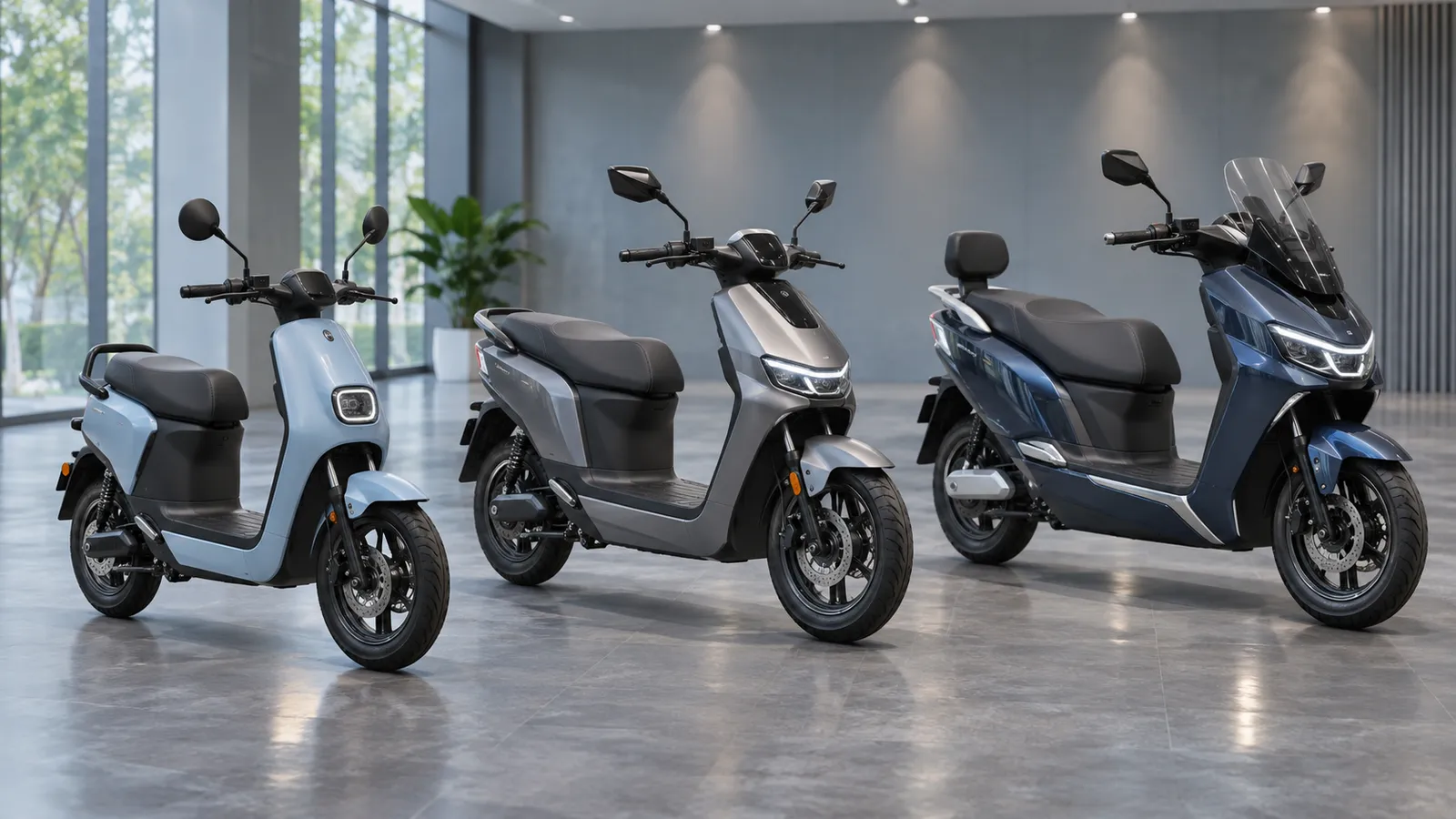
A strong electric scooter dealer product range has three clear tiers, each separated by battery energy, speed class and one feature a salesperson can name. This guide shows how to build it, avoid overlap and rotate slow movers.
Contents
- Why does an electric scooter dealer product range need tiers?
- What does a good-better-best range look like in practice?
- How do you match voltage and battery tiers to price bands?
- Should licence class come before battery size?
- How do you avoid overlap between models?
- How should dealers rotate the range and handle slow movers?
- How does STARGO support dealer range planning?
- Frequently Asked Questions
Key Takeaways
- A strong electric scooter dealer product range has three clear tiers, each separated by battery energy, speed class and one feature a salesperson can name.
- This guide shows how to build it, avoid overlap and rotate slow movers.
An electric scooter dealer product range works best as three clear tiers — good, better, best — where every step up adds battery energy, speed or licence class and one feature the customer can name. Get that architecture right and your showroom sells itself up the ladder instead of models competing with each other for the same buyer.
Quick answer: Build six to nine models in three tiers. Entry: 48–60V, lead-acid or small lithium, around 1,000–1,200 Wh, moped speeds. Core: 72V, roughly 2,000–2,400 Wh, disc brakes. Premium: lithium, higher power, ABS or smart features. Separate each pair of models on at least two axes, review weeks of cover monthly, and replace slow movers in the next order.
This guide is for importers and dealers planning a first or second order. It complements our step-by-step article on how to start an electric scooter dealership and focuses on one question: which models, in which proportions, at which price points.
Why does an electric scooter dealer product range need tiers?
Tiers give every walk-in customer an obvious first model and an obvious upgrade, which raises average ticket without discounting. Without tiers, dealers end up with five similar 72V scooters and no story to tell.
The market rewards this discipline. According to the IEA Global EV Outlook 2025, China, India and Southeast Asia account for about 80% of global two- and three-wheeler sales, and Viet Nam alone sold 250,000 electric two-wheelers in 2024. In markets like these, buyers compare several shops in one afternoon. A range that explains itself — "this one for the city, this one for longer commutes, this one if you want lithium and ABS" — converts faster than a wall of near-identical models.
Tiers also simplify everything behind the counter: fewer battery formats, fewer charger types and a shorter spare parts list.
What does a good-better-best range look like in practice?
Each tier is defined by a spec envelope, not by a single model. The table shows a typical envelope with example models from the STARGO catalogue; specs are taken from each product page.
| Tier | Role in the range | Spec envelope | Example models (catalogue specs) |
|---|---|---|---|
| Good (entry) | Traffic builder, first-time riders, students | 48–60V, lead-acid or small lithium, 1,000–1,200W rated, 50–60 km/h | Atlas: 60V 20Ah lead-acid, 1000W, 60 km, 50 km/h. CC1: 1200W, lead-acid, 40/55/70 km by battery, 60 km/h |
| Better (core) | Volume seller, daily commuters, delivery riders | 72V 32Ah class, 1,000–2,000W rated, disc brakes, 55–75 km/h | JOVA: 72V 32Ah, 1000W rated / 2000W peak, 75 km, vehicle IPX5, battery IPX7. TANK: 72V 32Ah lead-acid, 2000W, 75 km/h, front and rear disc |
| Best (premium) | Margin and brand halo, enthusiasts, long commutes | Lithium, 2,200W+ rated, smart display or ABS | SC5: 2200W rated / 3000W peak, 72V 32Ah, up to 80 km, 65 km/h. Green Edge: 5.5 kW, LiFePO4 72Ah (5068Wh), ABS + TCS |
Your local tier boundaries may sit higher or lower; the logic is what matters. Browse the full electric scooter range and the electric motorcycle range to fill each envelope.
How do you match voltage and battery tiers to price bands?
Anchor each price band to battery energy, because watt-hours drive both cost and real range. Calculate it as Wh = V × Ah, then check the step between tiers is large enough to justify the price gap.
- 60V × 20Ah = 1,200 Wh — typical entry pack
- 72V × 32Ah = 2,304 Wh — typical core pack, about 1.9 times the entry energy
- 72V × 65Ah = 4,680 Wh — premium pack, as on the ST7
A practical way to set price bands without guessing: write your landed cost for each model (C), your target gross margin (m) and the local shelf price of the nearest competitor (P). Shelf price = C ÷ (1 − m). If that price lands above P for a model with less Wh, the model is in the wrong tier or the wrong market. Repeat for each tier and look at the gaps: customers accept a step up when they can see what extra Wh, speed or safety they buy.
Chemistry is the second lever. Lead-acid keeps entry prices low; lithium lowers weight and extends life. Our guide on choosing between lead-acid, graphene and lithium explains the trade-offs, and real versus claimed range shows why you should quote range conservatively in every tier.
Should licence class come before battery size?
Yes — legal class sets who can buy the scooter, so plan tiers around it first. A faster model is not an upgrade if the customer cannot ride it on their licence.
In the EU, Regulation (EU) No 168/2013 places two-wheel mopeds with a maximum design speed above 25 km/h and up to 45 km/h, and continuous rated power up to 4 kW, in category L1e-B; faster machines fall into the L3e motorcycle category with different licence and insurance rules. Many non-EU markets use similar moped/motorcycle splits. In practice your "good" tier often equals "moped licence", while "best" may require a motorcycle licence and therefore targets a different customer altogether.
Before you finalise, confirm which models can be speed-limited for your market. Several STARGO models are listed as unlock-configurable, and our motor power guide explains how rated power relates to speed and hill climbing.
How do you avoid overlap between models?
Two models overlap when a customer cannot explain the difference in one sentence. Make every pair in the same tier differ on at least two of five axes.
- Style: retro, smart commuter, sport/off-road, maxi-scooter.
- Speed or licence class.
- Battery energy (Wh) and chemistry.
- Braking and safety: drum, disc, CBS, ABS.
- Load and use: rider only, rider plus passenger, delivery box.
Example: TANK (72V 32Ah lead-acid, 2000W, 75 km/h, disc brakes) and Avatar (72V 32Ah lead-acid, 1500W, 66 km/h, front disc and rear drum) are close in battery and speed. Stock both only if styling separates them clearly for your buyers; otherwise choose one for the core tier and use the shelf space for a different style. Our sibling guide on building a retro electric scooter lineup applies the same test across the retro catalogue.
How should dealers rotate the range and handle slow movers?
Review the range monthly with two numbers per model: sell-through and weeks of cover. Act on slow movers within two review cycles, before they tie up cash and floor space.
- Sell-through = units sold ÷ (opening stock + units received) for the period.
- Weeks of cover = stock on hand ÷ average weekly sales.
- Attachment rate = accessories or extended service sold ÷ units sold, by tier.
When a model stays well above the range average for weeks of cover, work down this list: move it to the front of the showroom with a test-ride offer; bundle a helmet or spare charger; offer it to small fleets; and finally replace it in the next order with a model from a gap in your tiers. Keep the best-selling core model permanently in stock — out-of-stocks on the volume seller cost more than any slow mover.
Plan replenishment around supplier lead time. If production takes 15–30 working days plus ocean transit, set your reorder point at average weekly sales × (lead time + transit + safety weeks).
How does STARGO support dealer range planning?
STARGO structures orders so dealers can test tiers with limited capital: the minimum order is 10 units per order (models can be mixed), including tricycles, and production lead time is 15–30 working days, depending on order quantity. Whether several models can share one container is confirmed per quotation; the mixed-model container guide shows how to plan the load.
Because vehicle lithium packs and BMS units are built in-house, several models can be quoted with either lead-acid or lithium packs — useful when you want one body in two tiers. Every container gets a pre-shipment production video before the balance payment, so you can check colours and configurations match your range plan. Details of support, territory and marketing assets are in the dealer program.
Frequently Asked Questions
How many models should a new electric scooter dealer stock?
Most new dealers do well with six to nine models split across three tiers: two or three entry models, three or four core models and one or two premium models. Fewer models mean deeper stock in each, which protects sizes, colours and spare parts availability.
What separates the good, better and best tiers?
Each tier should step up on battery energy in watt-hours, speed or licence class, and one named feature such as lithium chemistry, disc brakes, ABS or app connectivity. If a customer cannot hear the difference in one sentence, the two models overlap.
Should I sell lead-acid and lithium versions of the same model?
Yes, when the frame is shared. Offering one body with a lead-acid pack in the entry tier and a lithium pack in the core tier keeps spare parts simple while giving two price points. Confirm which models support both chemistries at quotation.
How do I know a model is a slow mover?
Track weeks of cover, which is stock on hand divided by average weekly sales. When a model holds far more weeks of cover than the range average for two review cycles, reposition it, bundle it, offer it to fleet buyers or drop it from the next order.
Can a small dealer test a new tier without a big order?
Yes. STARGO applies a minimum order of 10 units per order (models can be mixed), including tricycles, so a dealer can trial one new premium or entry model alongside proven sellers. Models can be mixed freely within the order; container loading is confirmed per quotation.
Does speed class change which tier a model belongs to?
Often it does. In the EU, a model limited to 45 km/h may fall in moped category L1e-B while faster models are motorcycles, which changes licence, insurance and buyer profile. Plan tiers by legal class first, then by battery and features.
Ready to turn your tier plan into a first order? Send your target market, licence classes and planned tiers to the STARGO sales team or sales@stargomoto.com, and we will propose models, battery options and a container plan for each tier.
Entity note: STARGO is the export brand of Guangxi Xinli New Energy Technology Co., Ltd., which assembles two-wheelers in Guigang and three-wheelers in Chongzuo, Guangxi, China. Specifications cited in this range-planning guide come from STARGO catalogue pages; configurations and documents are confirmed per model and market at quotation.