Retro Electric Scooter Wholesale: How Dealers Build a Lineup by Speed, Load and Battery
·
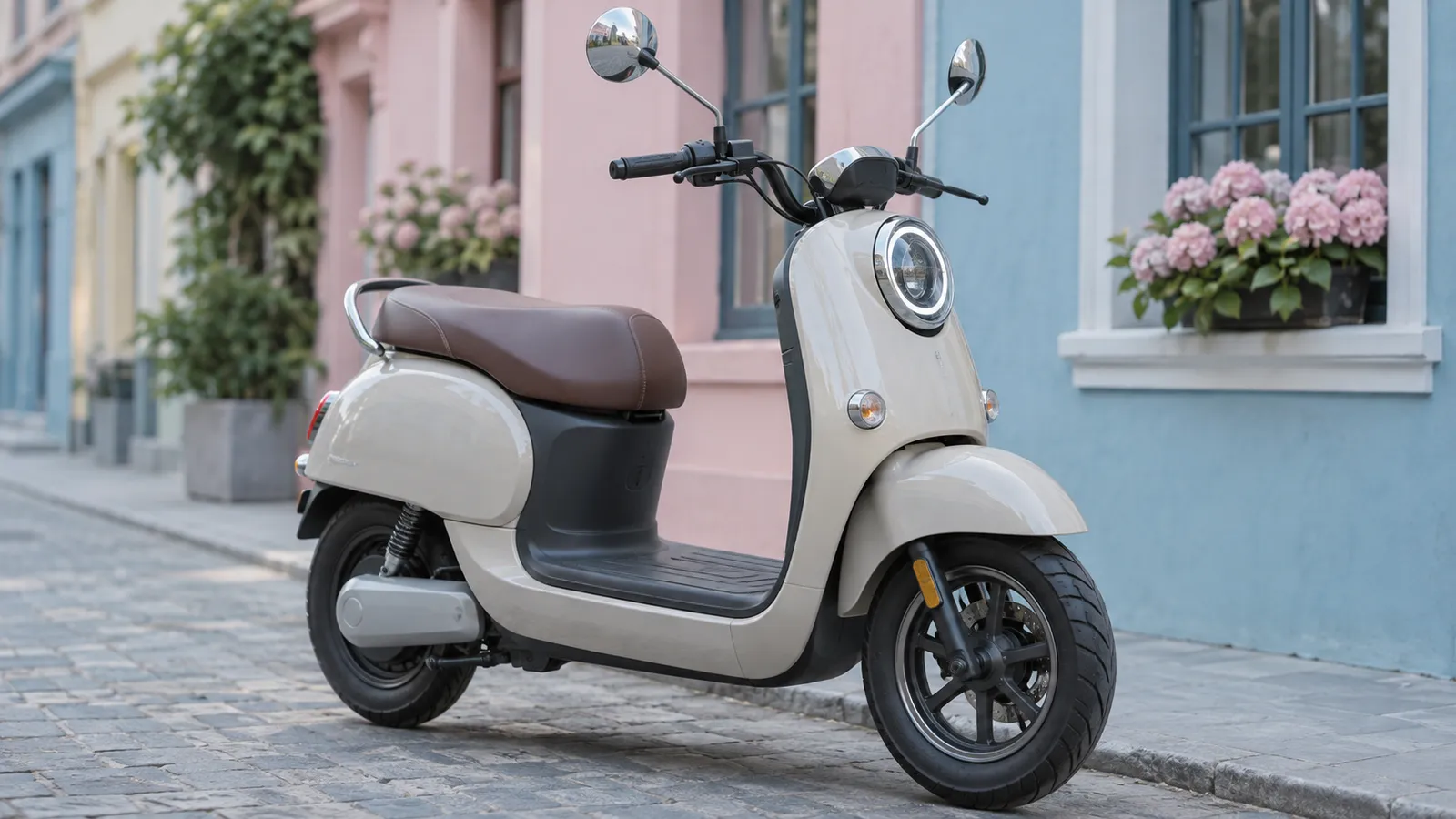
Retro electric scooter wholesale works best when dealers pick three or four models that do not overlap: one entry city scooter, one or two core models and one faster or heavier-duty option. This guide compares retro models by speed, load, wheel size and battery using catalogue specs.
Contents
- Why does retro styling sell for electric scooter dealers?
- How do retro electric scooter wholesale models compare on catalogue specs?
- How do you pick a 3–4 model retro lineup without overlap?
- Which battery should retro scooters carry?
- What do speed and regulations mean for retro models?
- How should a dealer plan colours and display stock?
- How does STARGO support retro scooter dealers?
- Frequently Asked Questions
Key Takeaways
- Retro electric scooter wholesale works best when dealers pick three or four models that do not overlap: one entry city scooter, one or two core models and one faster or heavier-duty option.
- This guide compares retro models by speed, load, wheel size and battery using catalogue specs.
Retro electric scooter wholesale rewards dealers who buy a small, deliberate lineup rather than every pretty model in the catalogue. Three or four retro scooters that differ clearly in top speed, load, wheel size and battery will cover more customers, and tie up less cash in duplicate stock, than eight models that all ride the same.
Quick answer: Build a retro scooter lineup in three bands: an entry city model around 50 km/h with a 60V lead-acid or light lithium pack, one or two core models at 55–66 km/h with bigger batteries or 14-inch wheels, and one upper model at 75–80 km/h or with a 150 kg load rating. Check each pair for overlap in speed, battery and wheel size before ordering.
Why does retro styling sell for electric scooter dealers?
Retro styling sells because it gives an electric scooter an emotional reason to buy that does not depend on specifications. Customers choose on colour and shape, then the dealer matches the battery and speed to their commute.
The market behind the trend is large. The IEA's Global EV Outlook 2025 reports that electric two-wheeler sales reached 10 million in 2024 and that the global electric sales share stayed at around 15%. In China, electric models have accounted for more than half of two-wheeler sales since 2020; Viet Nam recorded 250 000 electric two-wheeler sales, a share close to 10%. In markets where commuters can choose between many similar electric scooters, design is one of the few things a buyer notices in a few seconds.
For a dealer, retro models also bring three practical advantages:
- Broad buyer base: students, commuters, older riders returning to two wheels, and shops using a scooter as a branded delivery vehicle.
- Accessory revenue: racks, top boxes, windscreens, seat covers and colour-matched helmets fit the style.
- Marketing content: pastel or two-tone retro scooters photograph well for social media and test-ride events.
How do retro electric scooter wholesale models compare on catalogue specs?
Compare retro models on top speed, motor, battery energy, load rating, wheel size and brakes. The table below uses STARGO catalogue figures; battery energy is calculated as V × Ah.
| Model | Motor (rated) | Battery | Energy (V × Ah) | Range (catalogue) | Top speed | Load | Wheel | Brakes |
|---|---|---|---|---|---|---|---|---|
| Atlas | 1000W | 60V 20Ah lead-acid | 1,200 Wh | 60 km | 50 km/h | — | 10" | Drum |
| Sunny | 1000W | 72V 22Ah lithium (customisable) | 1,584 Wh | 60 km | 50 km/h | 200 kg | 10" | Disc + drum |
| Chroma | 1000/1200/1500W | 72V 23Ah lead-acid | 1,656 Wh | 60–80 km | 50 km/h | 115 kg | 10" | Front and rear disc |
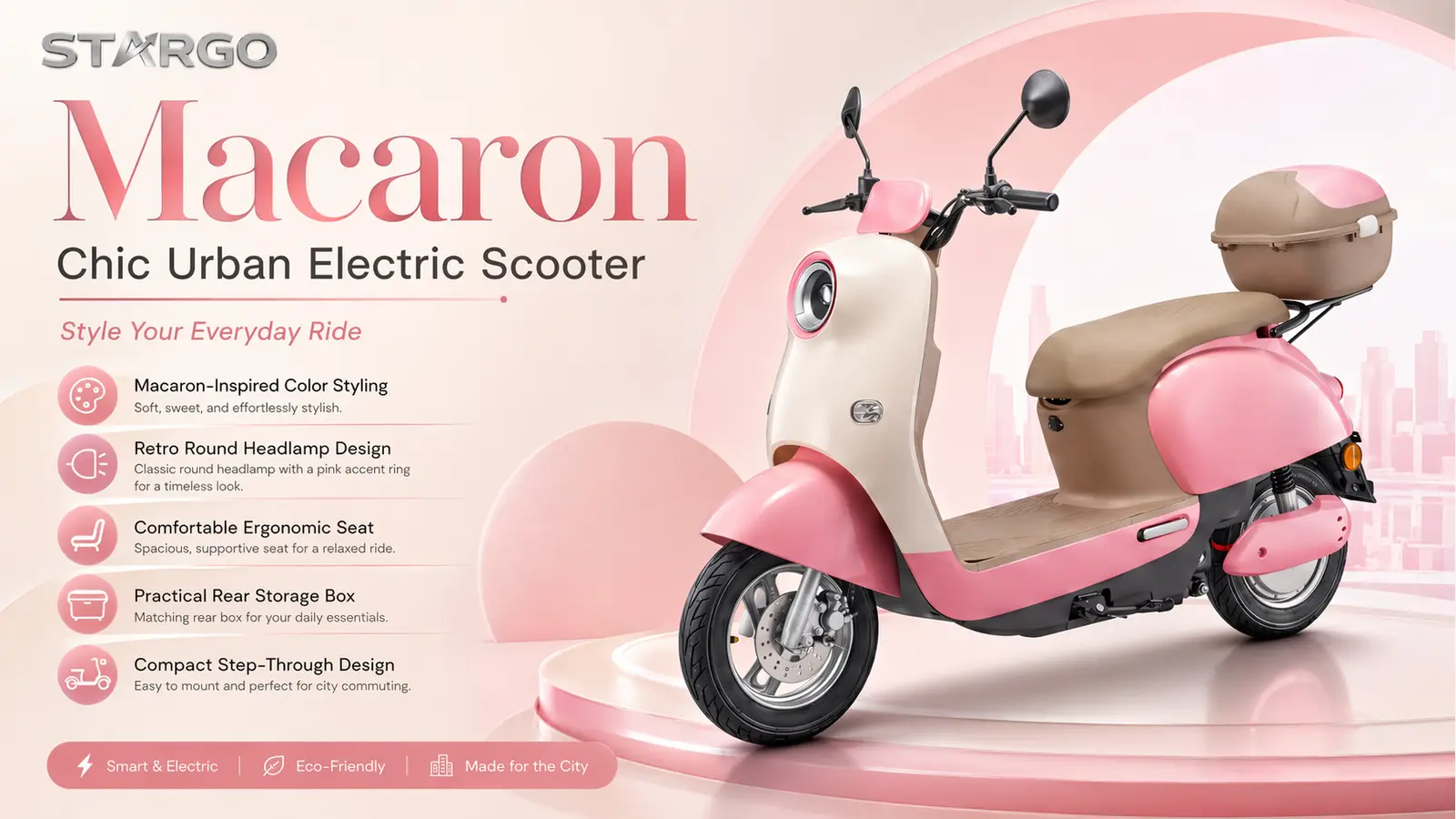
| Macaron | 1200W | 60V 20Ah lead-acid | 1,200 Wh | 60–80 km | 50–60 km/h | 95 kg | 14" | Drum |
| LUNA | 1200W | 60–72V 20Ah lead-acid / lithium | 1,200–1,440 Wh | 70 km (60V) | 55 km/h | 75 kg | 10" | Disc + drum |
| NOVA | 1200W standard (800–2000W options) | 60V/72V 20Ah lead-acid (lithium customisable) | 1,200–1,440 Wh | 70–80 km | 60 km/h | 250 kg | 10" | Drum |
| Venice | 1200W | 60V lead-acid; 72V 32Ah lithium customisable | 2,304 Wh (72V 32Ah) | 70 km (72V) | 60 km/h | 100 kg | 12" | Front and rear disc |
| Avatar | 1500W | 72V 32Ah lead-acid (export lithium available) | 2,304 Wh | 75 km | 66 km/h | 80 kg | 14" | Disc + drum |
| TANK | 2000W | 72V 32Ah lead-acid | 2,304 Wh | 75 km | 75 km/h | 150 kg | 12" | Front and rear disc |
| Phantom | 1300W | 72V 23Ah lead-acid | 1,656 Wh | 60–80 km | 80 km/h | 100 kg | 10" | Disc + drum |
"Disc + drum" means front disc and rear drum. Load figures are the catalogue's load capacity; a dash means the figure is confirmed at quotation. Ranges are catalogue values under the factory's conditions, so plan your sales claims from a loaded test, as explained in our sample evaluation protocol.
How do you pick a 3–4 model retro lineup without overlap?
Pick one model per band, then check every pair: if two models share speed band, battery and wheel size, keep only the one with the better styling for your market.
- Entry city band (about 50 km/h). Atlas for the simplest lead-acid, drum-brake option; Sunny if your customers carry the battery indoors, since it pairs a 72V 22Ah lithium pack with a 52 kg kerb weight. Chroma adds front and rear discs and three motor options in the same speed band.
- Core band (55–66 km/h). NOVA is the flexible one, with motor options from 800W to 2000W and a 250 kg load rating; Macaron and Avatar bring 14-inch wheels, which ride rough streets better; Venice offers 12-inch wheels and front and rear discs.
- Upper band (75–80 km/h or heavy load). TANK combines 2000W, 150 kg load and front and rear discs; Phantom is the faster, lighter choice at 80 km/h and 62 kg.
An example of overlap to avoid: Sunny and MOONCHASE share the same catalogue specification (1000W, 72V 22Ah, 50 km/h, 200 kg), so stocking both only makes sense if they serve different style preferences. The same discipline applies across your whole range; our guide to electric scooter dealer range planning sets out the good-better-best method in detail.
Which battery should retro scooters carry?
Choose lead-acid for price-sensitive customers with lead-acid service nearby, and lithium where riders charge indoors or value low weight. Many retro models offer both.
The trade-off is weight, service and warranty, not just purchase cost. Lithium packs are lighter and easier to carry upstairs; lead-acid is familiar to many workshops and simple to replace. STARGO's warranty reflects the difference: lithium batteries are covered for 12 months at 70% or more remaining capacity, lead-acid and graphene batteries for 6 months at 60% or more. Read how to choose between lead-acid, graphene and lithium and, for lithium chemistries, LFP vs NMC for electric two-wheelers.
Use the energy column to sanity-check range claims across chemistries: a 72V 32Ah pack holds 2,304 Wh whether it is lead-acid or lithium, but a lithium pack usually delivers more of that energy at high current. Our battery overview lists the pack options.
What do speed and regulations mean for retro models?
Top speed decides how a retro scooter is classified and licensed; check it against your market's moped limit before choosing models.
In the EU, Regulation (EU) No 168/2013 places two-wheel mopeds in category L1e-B: maximum design speed above 25 km/h and up to 45 km/h, and maximum continuous rated power up to 4 kW. A retro scooter that does 60–80 km/h as delivered falls into the motorcycle category L3e instead, with different licence and approval requirements. Several retro models in the catalogue list speeds above 45 km/h, and Avatar's 66 km/h is described as unlock-configurable, so ask for a speed-limited configuration where you need moped status. CE or EEC approval is available on application per model and market and is confirmed at quotation. See the EU L-category explainer and homologation support.
How should a dealer plan colours and display stock?
Limit colours per model on the first order, put the widest colour range on your best-seller, and use display units to sell custom colours on order.
- Two or three colours per model on a first order; slow colours are the main cause of aged retro stock.
- Show one unit of each model on the floor, in your strongest colour, and take orders for others.
- Keep a colour-matched spare panel or two for your top model, because painted panels are slow to replace.
- Consider your own logo or colourway once a model is proven; see customisation options.
How does STARGO support retro scooter dealers?
STARGO supplies the retro range above with an MOQ of 10 units per order, any model mix, so a dealer can test three or four retro scooters in one mixed container before committing to volume.
Lead time is 15–30 working days, depending on order quantity, and every container comes with a pre-shipment production video before the balance payment, so you can check colours and trim before paying. Vehicle lithium battery packs and BMS units are built in-house, which matters when you switch a retro model from lead-acid to lithium. Browse the electric scooter category and the dealer program.
Frequently Asked Questions
Why do retro electric scooters sell well for dealers?
Retro styling appeals across age groups, photographs well for social media, and sells on colour and design rather than only on specification. That lets a dealer compete on look and service, and add accessories such as racks, top boxes and seat covers.
How many retro models should a dealer stock at first?
Three or four. Choose one entry city model, one or two core models and one faster or heavier-duty model, each different in speed, battery or wheel size. More models at the start usually means duplicated specs and slow-moving colours.
Should retro scooters use lead-acid or lithium batteries?
Lead-acid suits price-sensitive buyers and markets with established lead-acid service. Lithium is lighter, easier to carry indoors for charging and usually holds capacity longer. Many retro models offer both, so match the battery to your customer and service set-up.
Can a retro electric scooter be sold as a moped in the EU?
Only in a configuration that meets the L1e-B limits of Regulation (EU) No 168/2013: a maximum design speed above 25 and up to 45 km/h, with continuous rated power up to 4 kW, plus the required type approval. Confirm the speed-limited configuration and approvals per model at quotation.
Can I mix several retro models in one order?
Yes. STARGO’s MOQ is 10 units per order (models can be mixed), so a first order can test three or four retro models together in one container. Colours, battery options and exact container mix are confirmed on the quotation.
Ready to build your retro lineup? Send your market, target speed band and battery preference to STARGO sales or sales@stargomoto.com for a mixed-model quotation.
Entity note: STARGO is the export brand of Guangxi Xinli New Energy Technology Co., Ltd., which assembles two-wheelers in Guigang and three-wheelers in Chongzuo, Guangxi, China. The retro scooters compared here are assembled at the Guigang two-wheeler base, with specifications as listed in the STARGO catalogue.