How to Launch a Private Label Electric Scooter Brand with an OEM
·
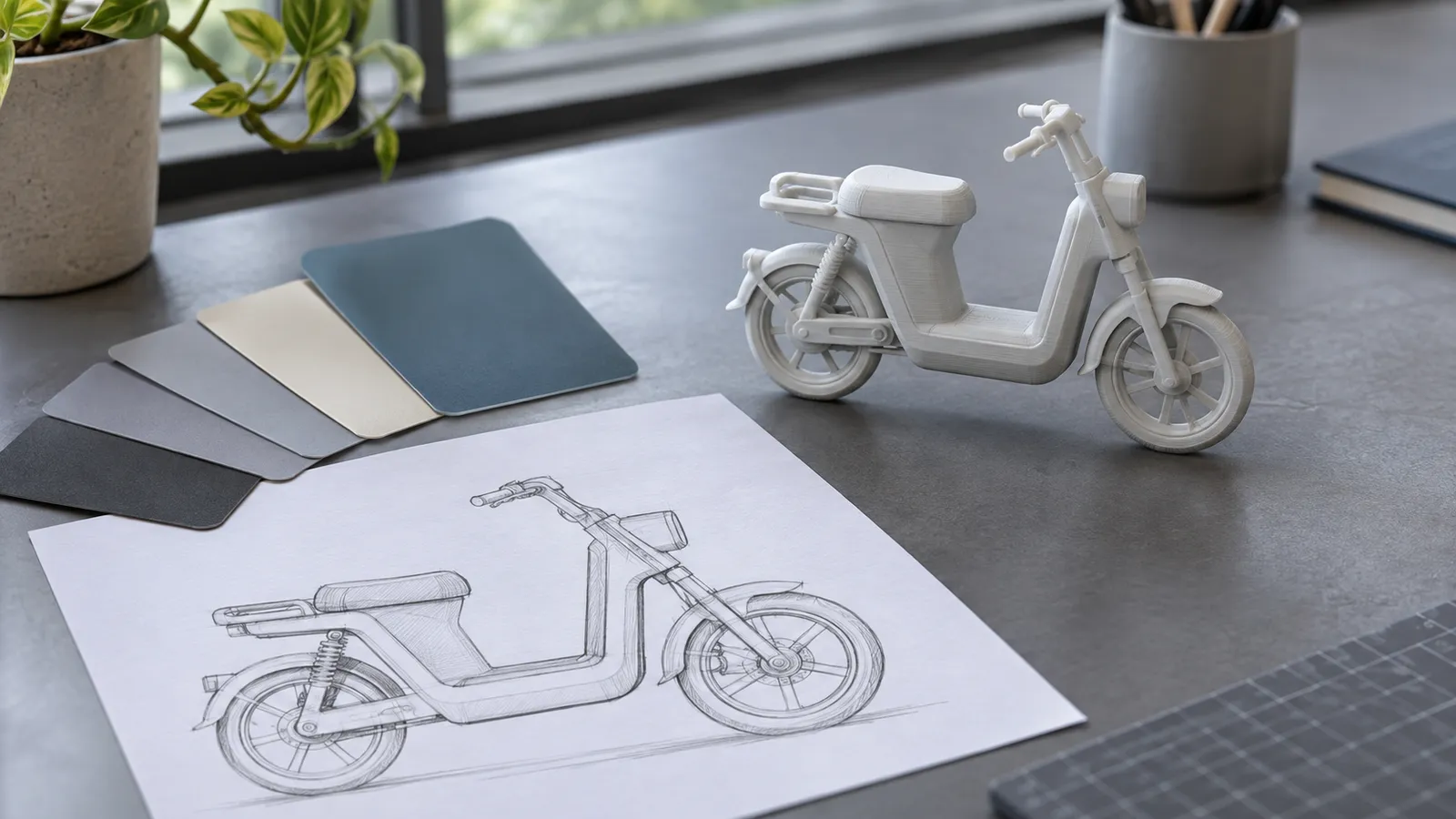
Launching a private label electric scooter with an OEM takes seven steps, from brand positioning to launch assets. This roadmap covers base models, logo and colour customisation, trademark and compliance, sample approval and production checks.
Contents
- What does a private label electric scooter OEM launch involve?
- How should you position a new private label brand?
- Which base models make the best private label platforms?
- What can you customise, and what does each choice cost in time?
- Who is legally the manufacturer when you sell under your own brand?
- How do you protect the brand name?
- How do you approve samples and check mass production?
- What launch assets should be ready before stock arrives?
- How does STARGO support private label brands?
- Frequently Asked Questions
Key Takeaways
- Launching a private label electric scooter with an OEM takes seven steps, from brand positioning to launch assets.
- This roadmap covers base models, logo and colour customisation, trademark and compliance, sample approval and production checks.
Launching a private label electric scooter with an OEM means taking a proven factory platform and selling it under your own brand — your logo, colours, packaging and documents — while the factory handles engineering and production. It works when you make seven decisions in order: positioning, base models, customisation, trademark and compliance, sample approval, production checks and launch assets.
Quick answer: Define who you sell to and at which tier, choose two or three proven base models with spare parts and documents in place, specify logo, colours, packaging and battery options, register your trademark and confirm who is the legal manufacturer, approve a golden sample, check production on video before paying the balance, and prepare photos, manuals and parts lists before stock lands.
This roadmap is for importers, distributors and retailers creating their own brand rather than buying a new engineering project. If you need a ground-up design, that is ODM work with a longer timeline; most first brands start as private label OEM on existing models.
What does a private label electric scooter OEM launch involve?
It is a seven-phase project where the buyer owns brand decisions and the OEM owns production. The table shows each phase, the decisions and the evidence to keep.
| Phase | Key decisions | Output to keep |
|---|---|---|
| 1. Positioning | Target customer, use case, licence class, price tier | One-page brand brief |
| 2. Base model selection | Which platforms, how many, battery options | Shortlist with catalogue specs |
| 3. Customisation spec | Logo, colours, decals, packaging, manuals, configuration | Artwork files and spec sheet per SKU |
| 4. Trademark and compliance | Trademark filings, manufacturer of record, approvals | Filing receipts, approval plan |
| 5. Sample approval | Golden sample, colour and logo sign-off | Signed sample record with photos |
| 6. Production check | Pre-shipment video review, optional third-party inspection | Approval message before balance payment |
| 7. Launch assets | Photos, spec sheets, manuals, warranty card, parts list | Dealer launch kit |
How should you position a new private label brand?
Position by customer and use before styling: who rides it, for what trip, on which licence, at which price tier. A clear position stops you from ordering five similar models.
Write a one-page brief answering: primary rider (commuter, student, delivery, senior), main trip length, licence or vehicle class allowed, the tier you compete in, and the one promise your brand makes — reliability, style, range or service. Our sibling guide on planning a good-better-best dealer range shows how to translate that into tiers.
Which base models make the best private label platforms?
Choose platforms that are already proven, have spare parts and documentation, and offer battery options so one body covers two price points.
- Modular battery options: CUBIX lists a 72V 2500W standard specification, a 48V 500W low-spec option and 20–60Ah battery options, with 65–120 km range by configuration.
- Smart commuter: SC3 lists 1600W rated / 2600W peak, 72V 20Ah or 32Ah and 75 km or 100 km range (SC3 / SC3 MAX).
- Weather-ready commuter: JOVA lists a 72V 32Ah pack, 75 km range and IPX5 vehicle / IPX7 battery ratings.
- Passenger tricycle brand: Zephyr lists 600W, 48V 20Ah lithium and 60 km+ range.
Check each shortlisted model's document status for your market before committing: which approvals are available, what the CoC or test reports show, and whether they can be issued in a way that matches your brand. See CE, EEC, CoC and SONCAP explained.
What can you customise, and what does each choice cost in time?
Cosmetic changes such as logo, decals and packaging are the fastest; colour, battery and configuration changes need more confirmation. Every option is confirmed per model at quotation; OEM customization adds 7–14 days to the lead time.
| Element | What you supply | What to confirm |
|---|---|---|
| Logo and decals | Vector artwork, position drawings | Method (decal, print, emblem), placement on each panel |
| Body colours | Colour references and finish (gloss, matte) | Which colours are standard vs custom, minimum per colour |
| Packaging | Carton artwork, labels, barcodes | Carton strength, language, shipping marks |
| Manuals and labels | Brand name, address, language versions | Mandatory safety and battery labels for your market |
| Battery and configuration | Target range, chemistry, voltage | Available packs per model, charger match, documents |
Full options are on the STARGO customization page, and the OEM / ODM category page explains the process.
Who is legally the manufacturer when you sell under your own brand?
Often you are. Under EU product rules, whoever places a product on the market under their own name or trademark takes on the manufacturer's obligations.
The European Commission's Blue Guide on the implementation of EU product rules (2022) explains this principle for products under the New Legislative Framework. Road-going two- and three-wheelers in the EU are approved under Regulation (EU) No 168/2013, where the type-approval holder is responsible for conformity, so agree in writing whose name appears on the approval, the CoC and the vehicle plate. Other markets have their own rules; your homologation adviser should confirm. STARGO's homologation support page lists what is prepared per destination market.
How do you protect the brand name?
Register the trademark in each target market before you print a single carton. Rebranding after launch costs far more than filing early.
Search the name in national trademark databases, file in your home country, then extend. With WIPO's Madrid System, one international application in one language with one set of fees can cover several member countries, but you first need a basic mark — a national application or registration with your office of origin. Also agree in writing with the factory how your logo files and moulds may be used; the private label and exclusivity answer page explains how STARGO authorises private-label use.
How do you approve samples and check mass production?
Approve a golden sample, then hold every production batch to it. Colour and logo disputes almost always trace back to an unsigned sample.
- Approve the first unit built with your artwork in your order (MOQ 10 units, models mixed), in person or from photos; use our sample evaluation protocol for function tests.
- Sign off colour references, logo positions, decals, carton print and manual text in one record.
- Confirm the production spec sheet per SKU: motor, battery, charger, tyres, brakes, colours.
- Review the pre-shipment production video against the golden sample before releasing the balance.
- Add third-party inspection for first orders if your buyers or tenders require it.
What launch assets should be ready before stock arrives?
Have photos, spec sheets, manuals, warranty terms and a spare parts list in your brand before the container lands, so dealers can sell from day one.
- Studio and lifestyle photos of each SKU in your colours.
- Spec sheets with conservative range figures and the test condition stated.
- Owner's manual, charger and battery safety instructions in local languages.
- Warranty card that mirrors your supplier's terms, plus a claim process for dealers.
- Spare parts list with part numbers, and a first parts order; see spare parts stocking for dealers.
How does STARGO support private label brands?
STARGO supplies private label two-wheelers from Guigang and three-wheelers from Chongzuo, with a minimum order of 10 units per order (models can be mixed) and a lead time of 15–30 working days once the order is confirmed, depending on order quantity; OEM customization adds 7–14 days. Vehicle lithium packs and BMS units are built in-house, which makes battery options per model easier to configure.
Every container gets a pre-shipment production video before the balance payment. Warranty terms you can mirror on your own card: whole vehicle 12 months, motor and controller 12 months, frame 24 months, lithium battery 12 months at ≥70% remaining capacity, lead-acid and graphene batteries 6 months at ≥60%. CE / EEC / CB / COC / SONCAP are applied per model and market and confirmed at quotation. For a full list of options, read the sibling article on STARGO OEM/ODM customisation options.

Frequently Asked Questions
What is a private label electric scooter?
A private label electric scooter is built by a manufacturer on its existing platform and sold under the buyer's own brand, with the buyer's logo, colours, packaging and documents. The buyer owns the brand and market; the factory owns the engineering and production.
What can usually be customised in a private label order?
Typical options are logo and decals, body colours, packaging and cartons, manuals and labels in your brand, and configuration choices such as battery type or capacity. The exact options for each model are confirmed at quotation; OEM customization adds 7–14 days to the lead time.
Do I become the manufacturer when I sell scooters under my brand?
In many markets, yes. EU product rules explained in the Commission's Blue Guide treat whoever markets a product under their own name or trademark as the manufacturer, with the matching obligations. For type-approved vehicles, confirm with your homologation adviser who holds the approval.
Should I register my trademark before ordering?
Yes. Register in every target market before cartons and decals are printed. If you use WIPO's Madrid System, you first need a basic national application or registration, then one international application can cover several member countries.
What is the minimum order for a private label scooter at STARGO?
STARGO applies a minimum order of 10 units per order (models can be mixed), including tricycles. Lead time is 15–30 working days, depending on order quantity (OEM customization adds 7–14 days), and every container gets a pre-shipment production video before the balance payment.
How should I approve colours and logos before mass production?
Approve a physical or photographed golden sample with your logo position, colour references and decals, and keep it as the standard. Then check the pre-shipment production video against that sample before releasing the balance payment.
Ready to build your brand? Send your brand brief, target markets and shortlisted models to STARGO's OEM team or sales@stargomoto.com, and we will confirm customisation options, documents and the golden-sample approval steps for your private label launch.
Entity note: STARGO is the export brand of Guangxi Xinli New Energy Technology Co., Ltd., which assembles two-wheelers in Guigang and three-wheelers in Chongzuo, Guangxi, China. Private label customisation options, documents and approvals are confirmed per model and market at quotation.