Electric Motorcycle RFQ Template for Fleets and Tenders: Sections, Spec Table and Scoring
·
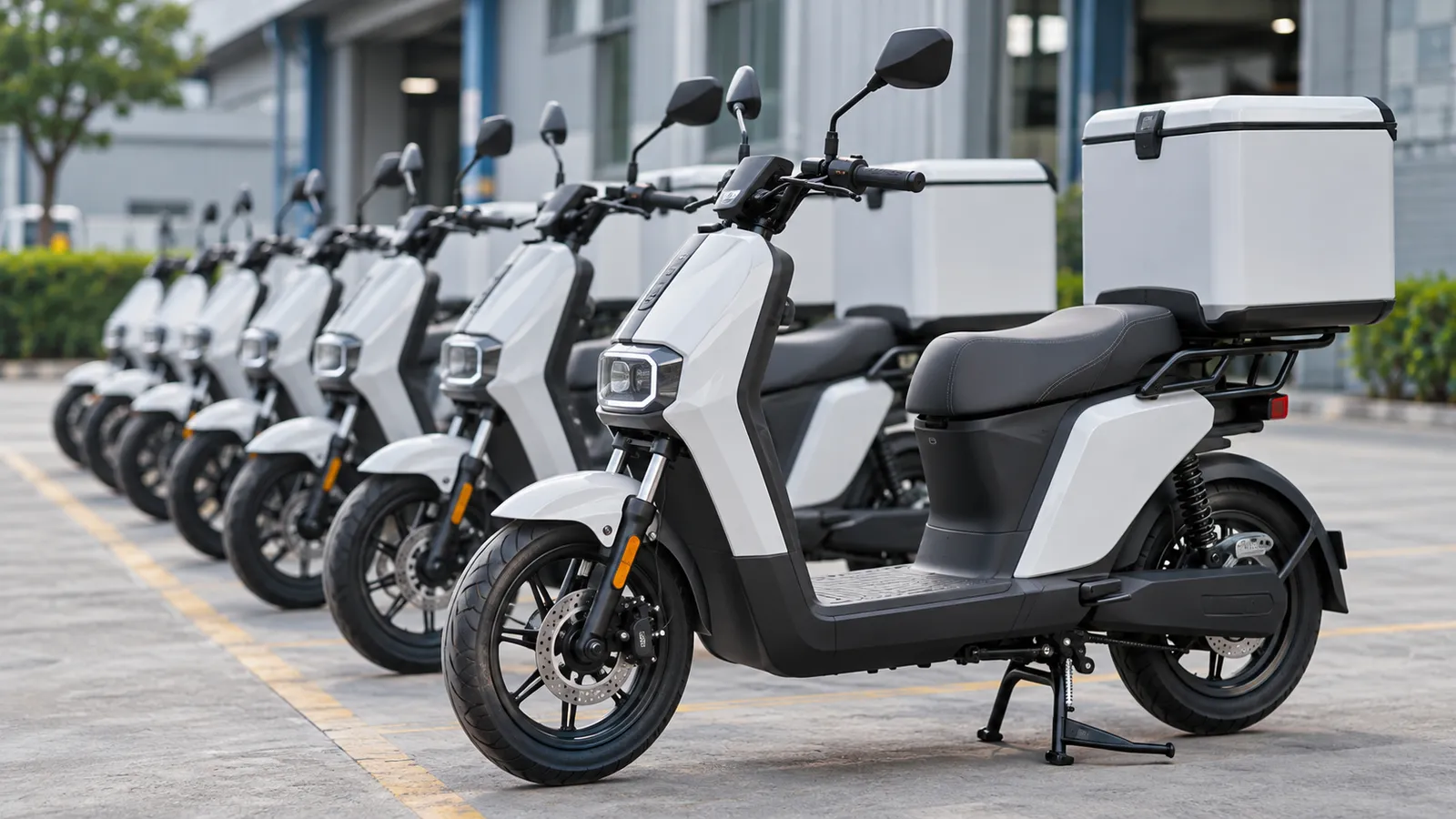
A good electric motorcycle RFQ template makes every supplier answer the same questions in the same units. This ready structure covers use profile, a technical spec table, battery and documents, warranty, parts, delivery terms and a weighted scoring sheet, so fleet and tender buyers can compare offers fairly.
Contents
- Why do fleets need a structured electric motorcycle RFQ template?
- Section 1–2: How do you describe the use profile and buyer details?
- Section 3: What goes in the technical specification table?
- Section 4–5: How should the RFQ handle battery, documents and homologation?
- Section 6–7: What should buyers ask about warranty, parts and service?
- Section 8–9: How do you specify delivery, inspection and commercial terms?
- Section 10: How should you score and award the bids?
- How does STARGO answer a fleet electric motorcycle RFQ?
- Frequently Asked Questions
Key Takeaways
- A good electric motorcycle RFQ template makes every supplier answer the same questions in the same units.
- This ready structure covers use profile, a technical spec table, battery and documents, warranty, parts, delivery terms and a weighted scoring sheet, so fleet and tender buyers can compare offers fairly.
An electric motorcycle RFQ template exists to make every supplier answer the same questions in the same units, so offers can be compared and scored fairly. Fleet and tender buyers who send a one-line request ("price for 200 electric motorcycles, 100 km range") get back quotations that cannot be compared.
Quick answer: Structure the RFQ in ten parts: buyer and use profile, technical specification table, battery and charging, homologation and documents, warranty, spare parts and service, packing and delivery under a named Incoterms® 2020 rule, inspection, commercial terms, and a scoring method published in advance. Require answers in your format, with evidence for every claimed number.
Why do fleets need a structured electric motorcycle RFQ template?
Because electric motorcycle specifications are easy to state in flattering ways: peak instead of rated power, Ah instead of Wh, range at an unrealistic speed. A template removes that room.
It also protects the buyer. A published scoring method and a fixed response format make the award defensible to finance, auditors and losing bidders. And it saves time: you score answers in one spreadsheet instead of decoding ten different catalogues. Once offers come in, our sibling article on how to compare China supplier quotations shows how to normalise anything the template did not fix.
Section 1–2: How do you describe the use profile and buyer details?
Describe the duty cycle in numbers: daily kilometres, average and peak speed, rider plus cargo mass, gradients, climate and charging opportunities. Suppliers can only size a bike to a profile they know.
- Buyer: organisation, delivery country and city, contact, quantity (pilot and full), schedule.
- Daily distance: km per shift and shifts per day.
- Speeds: typical urban speed and any required top speed or speed-limit setting.
- Load: rider mass plus cargo box and goods (kg); box dimensions if supplied by you.
- Terrain and climate: maximum gradient, flooding, temperature range.
- Charging: depot charging, home charging, or battery swapping; mains voltage and plug type.
- Licence / category: required vehicle class (for example a moped class up to 45 km/h or a motorcycle class).
Section 3: What goes in the technical specification table?
A table with your requirement, the supplier's declared value, the unit and the evidence required. Ask for rated and peak values separately and for test conditions on every performance figure.
| Parameter | Buyer requirement (fill in) | Unit / format | Evidence required |
|---|---|---|---|
| Motor type and position | Hub / mid-mounted | Text | Datasheet |
| Motor rated power | ≥ ___ | W (continuous) | Datasheet / test report |
| Motor peak power | ≥ ___ | W (state duration) | Datasheet |
| Controller | Type and current limit | Sine / FOC; A | Datasheet |
| System voltage | ___ | V nominal | Battery label |
| Battery energy | ≥ ___ | Wh (= V × Ah) | Battery label, spec sheet |
| Range | ≥ ___ at ___ km/h, ___ kg load | km | Test method and result |
| Top speed | ___ | km/h | Spec sheet / approval doc |
| Gradeability | ≥ ___ | ° or % at stated load | Test result |
| Brakes | Disc / CBS / ABS | Text | Spec sheet |
| Tyres and wheels | Size, tubeless | e.g. 100/80-14 | Spec sheet |
| Payload / max load | ≥ ___ | kg | Spec sheet |
| Ingress protection | Vehicle / battery / motor rating | IP code per component | Test report |
| Telematics | GPS, app, remote lock | Text; SIM / data plan | Demo |
| Charging time | ≤ ___ | h, 0–100% or 0–80% | Spec sheet |
Ingress protection deserves its own line because ratings often apply to one component, not the vehicle; our sibling explainer on IP ratings for electric scooters shows how to ask. For realistic range wording, see real range vs claimed range.
Section 4–5: How should the RFQ handle battery, documents and homologation?
Make battery documents and homologation evidence mandatory pass/fail items. A bid without them should not be scored.
For every lithium battery model, require the UN38.3 test summary and an MSDS/SDS. The US regulator PHMSA's test summary guidance lists what a summary must contain, including the manufacturer and test lab, a unique report number and date, the battery's watt-hour rating and mass, the list of tests (T.1 altitude simulation to T.8 forced discharge) with pass/fail results, and the edition of the UN Manual of Tests and Criteria used. Ask for those fields explicitly.
- Battery chemistry (LFP, NMC, lead-acid), cell origin if relevant, BMS functions.
- Vehicle approval documents required in your market (for example COC, EEC, SONCAP), and who applies for them.
- Country-of-origin documents (CO, or Form E for China–ASEAN FTA preference).
- Charger input voltage, plug type and safety marking for your market.
Our pages on lithium battery shipping documents and CE / EEC / COC / SONCAP certification explain each document.
Section 6–7: What should buyers ask about warranty, parts and service?
Ask for warranty by component with conditions, a priced recommended spare parts list per 100 vehicles, and the claim process with evidence required and response times.
- Warranty matrix: whole vehicle, motor, controller, frame, battery (months and the capacity threshold for battery claims).
- Claim process: evidence needed (photos, video, serial and VIN), how replacement parts are shipped, who pays freight.
- Parts: recommended initial kit, part numbers, availability period after the model ends.
- Training: workshop manuals, wiring diagrams, diagnostic tools, remote support.
Our sibling article on the spare parts stocking plan and the warranty claim process page show what a workable answer looks like.
Section 8–9: How do you specify delivery, inspection and commercial terms?
Name one Incoterms® 2020 rule and place, define packing (CBU, SKD or CKD), state the inspection method and sampling plan, and fix payment milestones.
The ICC's Incoterms® 2020 are eleven three-letter trade terms; write the exact rule and named place (for example "FOB [named port of loading]" or "CIF Lagos") so every bidder prices the same scope. For inspection, reference a sampling standard such as ISO 2859-1, which indexes sampling schemes by acceptance quality limit (AQL), and state the AQL levels for critical, major and minor defects. Our sibling pre-shipment inspection checklist gives a ready function-check list, and Incoterms for electric vehicle imports compares FOB, CIF and DDP.
- Packing level: CBU, SKD or CKD, and units per 20GP / 40HQ.
- Lead time from deposit to loading, in working days.
- Payment terms and the milestone that releases the balance.
- Pilot quantity before the full order, and acceptance criteria for the pilot.
Section 10: How should you score and award the bids?
Publish weighted criteria before bids arrive, apply pass/fail gates first, then score each criterion on a fixed scale with evidence. The weights below are a template; set your own.
| Criterion | Example weight (adjust) | How to score (0–5) |
|---|---|---|
| Mandatory gates (battery documents, approval route, complete response) | Pass / fail | Missing item = bid not scored |
| Technical compliance with spec table | 30% | 5 = all met with evidence; deduct per shortfall |
| Total cost of ownership | 25% | Vehicle + batteries + energy + parts over your contract life |
| Battery and warranty terms | 15% | Battery months and capacity threshold; component coverage |
| After-sales, parts and training | 15% | Parts list completeness, claim process, response times |
| Delivery, documents and verification | 15% | Lead time, Incoterm scope, pre-shipment evidence |
Weighted score = Σ (criterion score ÷ 5 × weight). For the cost line, use the framework in our sibling article on electric vs petrol total cost of ownership, and verify shortlisted bidders with the supplier vetting checklist.
How does STARGO answer a fleet electric motorcycle RFQ?
STARGO answers in the buyer's format, with catalogue values where they exist and "confirmed at quotation" where they do not. It does not fill gaps with estimates.
Typical fleet candidates include the DM-E Series (72V; DM-E1 2 kW rated with 30Ah × 2 battery, 160 km at 45 km/h; LCD with cruise control, reverse and USB charging) and the ST7 (72V 65Ah lithium, 6.5 kW, ABS + TCS, GNSS / app / NFC). Commercial facts STARGO can commit to in an RFQ response:
- MOQ 10 units per order (models can be mixed), which suits a paid pilot before the main award.
- Lead time 15–30 working days, depending on order quantity.
- A pre-shipment production video (PSPV) for every container before the balance payment.
- Warranty: whole vehicle 12 months; motor and controller 12 months; frame 24 months (structural); lithium battery 12 months at ≥70% capacity.
- Battery packs and BMS built in-house; CI, PL, B/L; Form E / CO on request; UN38.3 / MSDS for applicable battery packs; CE / EEC / CB / COC / SONCAP applied per model and market — confirm at quotation.
See the payment terms and PSPV process for how deposits and balance work.
Frequently Asked Questions
What should an electric motorcycle RFQ include?
Include the use profile, a technical specification table with required units, battery details and shipping documents, homologation and certificates, warranty terms, a spare parts list, packing and delivery terms under a named Incoterms rule, inspection method, payment terms and a scoring method announced in advance.
Why specify battery energy in Wh instead of Ah in an RFQ?
Amp-hours mean nothing without voltage. A 72V 30Ah pack and a 60V 36Ah pack both hold about 2,160 Wh. Asking for watt-hours (V × Ah), chemistry and usable range at a stated test speed and load stops suppliers from making a smaller battery look bigger.
How should fleet buyers score electric motorcycle quotations?
Publish weighted criteria before bids arrive, for example technical compliance, total cost of ownership, battery and warranty, after-sales and parts, delivery and documents. Score each criterion on a fixed scale with written evidence, multiply by its weight and sum. Treat mandatory items such as battery documents as pass/fail.
Which battery documents should an RFQ require?
Require the UN38.3 test summary for each lithium battery model, a safety data sheet (MSDS/SDS), the battery's Wh rating and chemistry on the label, and the warranty capacity threshold. The test summary should name the manufacturer, test lab, report number and the tests passed.
How long should suppliers get to answer a fleet RFQ?
Allow enough time for factories to confirm configurations and documents, typically one to three weeks depending on complexity. Publish a single deadline, a clarification window with answers shared to all bidders, and a fixed response format such as your spec table, so late or partial offers are easy to spot.
Can a supplier with a 10-unit MOQ handle a fleet pilot?
Yes, and it is useful. A 10-unit MOQ lets you run a paid pilot on real routes before awarding a large contract. STARGO's MOQ is 10 units per order (models can be mixed), with 15–30 working days, depending on order quantity.
Running a fleet tender or pilot? Send your RFQ or use profile through our contact page or to sales@stargomoto.com, and STARGO will return a line-by-line response in your format.
Entity note: STARGO is the export brand of Guangxi Xinli New Energy Technology Co., Ltd., which assembles two-wheelers in Guigang and three-wheelers in Chongzuo, Guangxi, China. It answers fleet RFQs with catalogue specifications and approved commercial terms, marking anything else as confirmed at quotation.