What Is a BMS Battery Management System? How It Protects Electric Scooter Packs
·
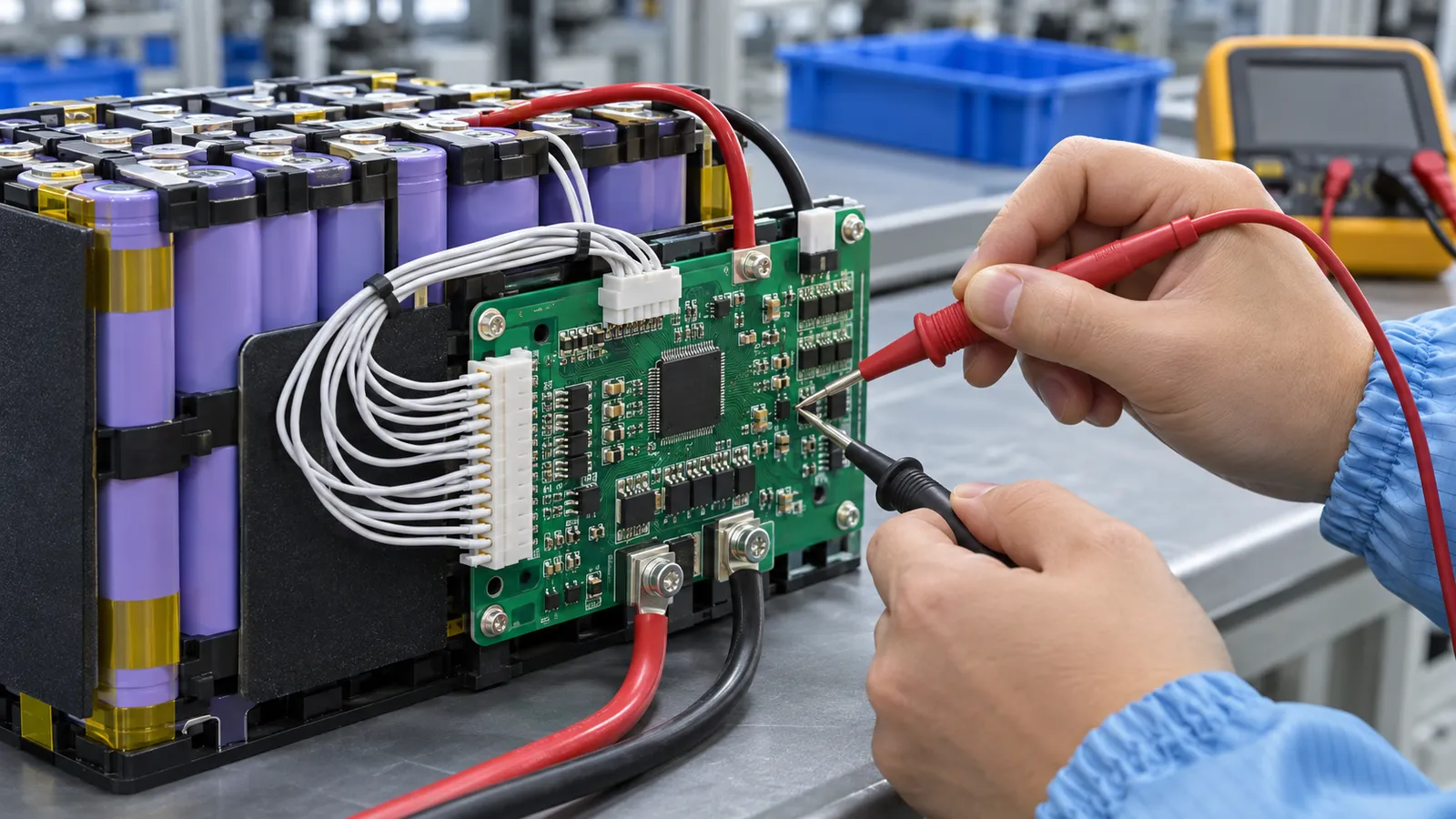
A BMS battery management system is the control board inside a lithium scooter pack that stops overcharge, over-discharge, overcurrent and overheating, and balances cells. This guide decodes BMS specs and explains why pack, BMS, controller and charger must match.
Contents
- What does a BMS actually do in an electric scooter battery?
- How do you read a BMS specification?
- Passive or active balancing: which does a scooter pack need?
- Why must the pack, BMS, controller and charger be matched?
- How does the BMS relate to UN 38.3 and EU battery rules?
- What should importers ask a supplier about the BMS?
- How does STARGO build battery packs and BMS units?
- Frequently Asked Questions
Key Takeaways
- A BMS battery management system is the control board inside a lithium scooter pack that stops overcharge, over-discharge, overcurrent and overheating, and balances cells.
- This guide decodes BMS specs and explains why pack, BMS, controller and charger must match.
A BMS (battery management system) is the electronic board inside a lithium battery pack that measures cell voltages, pack current and temperature, and limits or disconnects the pack before it is overcharged, over-discharged, overloaded or overheated. So when buyers ask what is a BMS battery management system on an electric scooter, the short answer is: it is the pack's safety officer, fuel gauge and data logger in one, and it decides how much power the controller may draw.
Quick answer: A BMS is the control board built into a lithium scooter battery. It watches every series cell group, cuts charging at the upper voltage limit, cuts discharge at the lower limit, limits current and blocks charging outside safe temperatures, and balances cells so they age evenly. A well-matched BMS protects riders and extends pack life; a mismatched one causes cut-outs and warranty claims.
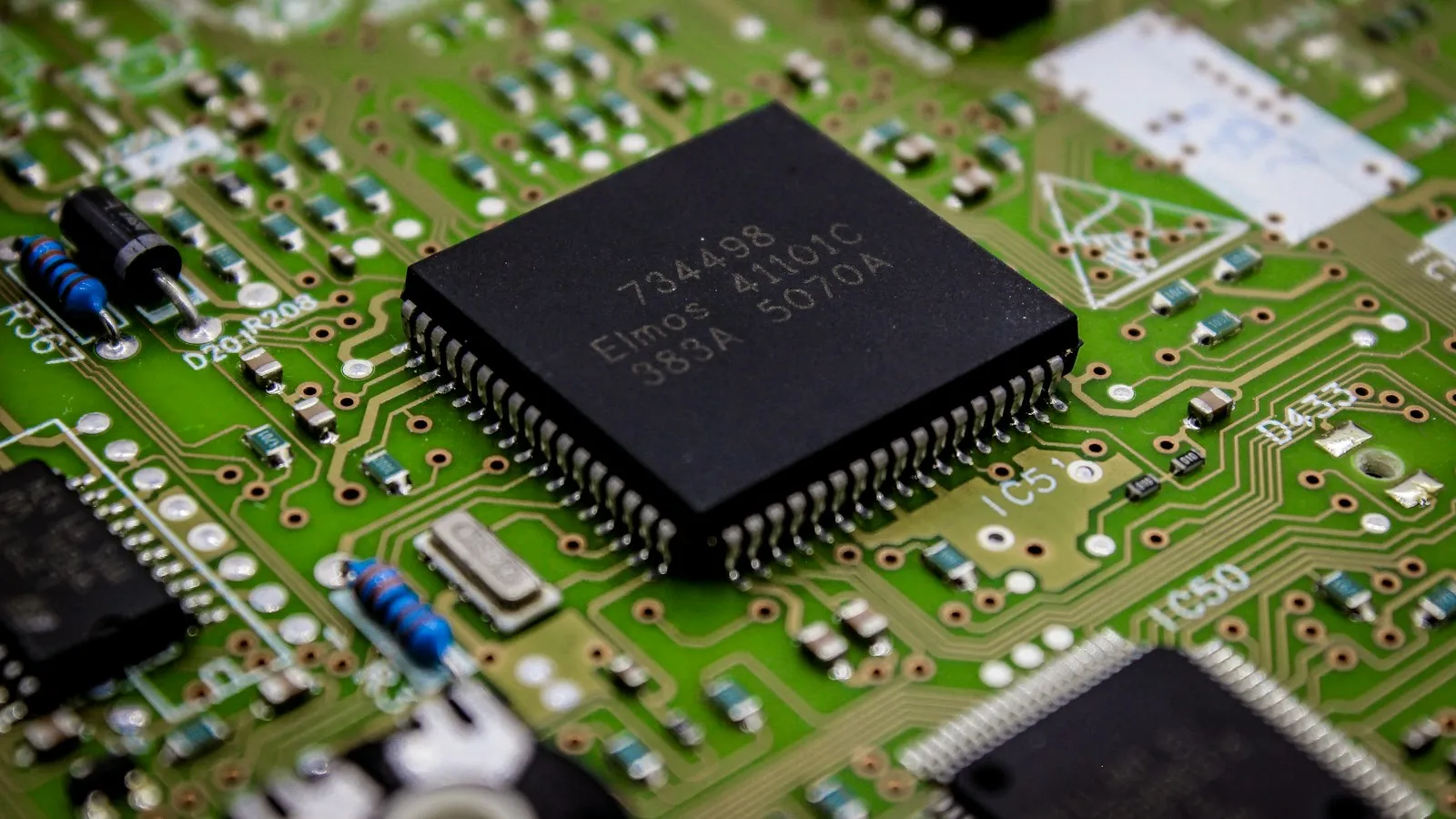
What does a BMS actually do in an electric scooter battery?
A BMS performs six protection and management jobs, and every lithium two-wheeler pack needs all six. Lead-acid batteries can survive without one; lithium cells cannot, because a single cell pushed outside its voltage window is damaged permanently.
- Overcharge protection: stops charging when any cell group reaches its upper limit (about 3.65 V for LFP cells), even if the charger keeps pushing.
- Over-discharge protection: disconnects the load when any cell group falls to its cut-off (typically 2.5 V for LFP), so the rider cannot drain a weak cell to zero.
- Overcurrent and short-circuit protection: limits or cuts output when current exceeds the rated discharge, and trips in microseconds on a dead short.
- Temperature protection: uses thermistors on the cells to block charging when the pack is too cold or too hot, and to cut discharge when it overheats.
- Cell balancing: evens out small differences between cell groups so the weakest group does not set the limit for the whole pack.
- State estimation and communication: estimates state of charge (SOC) and state of health (SOH), and reports them over Bluetooth, CAN or RS485 to the dashboard, an app or a fleet system.
The key point for buyers: a pack is only as strong as its weakest series group. The BMS is what stops that one group from dragging the rest of the pack, and the rider, into trouble.
How do you read a BMS specification?
Read it as three numbers: the series count (S), the maximum discharge current (A) and the balancing type. Together they tell you the pack voltage window and the maximum power the controller can draw.
The series count sets voltage. Pack nominal voltage = S × cell nominal voltage. LFP cells are 3.2 V nominal, so a 20S LFP pack is 20 × 3.2 = 64 V, sold as a "60V" pack; a 24S LFP pack is 76.8 V, sold as "72V". The current rating sets power: maximum electrical power ≈ nominal voltage × BMS discharge current. The table below decodes real packs from the STARGO lithium battery range.
| Pack | Nominal voltage | BMS | Charge voltage (per cell) | Low-voltage cut-off (per cell) | Max power the BMS allows (V × A) |
|---|---|---|---|---|---|
| 48V 30Ah LFP | 51.2 V | 16S 50A | 58.4 V (3.65 V) | 40 V (2.5 V) | ≈ 2.56 kW |
| 60V 30Ah LFP | 64 V | 20S 60A | 72 V (3.6 V) | 50 V (2.5 V) | ≈ 3.84 kW |
| 60V 25Ah LFP | 64 V | 20S 100A | 72 V (3.6 V) | 50 V (2.5 V) | ≈ 6.4 kW |
| 72V 25Ah LFP | 76.8 V | 24S 100A | 87.6 V (3.65 V) | 60 V (2.5 V) | ≈ 7.68 kW |
| 72V 50Ah LFP | 76.8 V | 24S 80A | 87.6 V (3.65 V) | 60 V (2.5 V) | ≈ 6.14 kW |
Notice that the 25Ah pack carries a higher-current BMS than the 50Ah pack at the same voltage. Capacity (Ah) decides range; the BMS current decides acceleration and hill-climbing headroom. Buyers who compare packs only by Ah miss half the story. For more on why cell chemistry changes these voltages, see our sibling article on LFP vs NMC batteries for electric two-wheelers.
Passive or active balancing: which does a scooter pack need?
Most scooter and motorcycle packs work well with passive balancing; active balancing earns its cost on large, high-value packs that are rarely charged full. The difference is where the excess energy goes.
Passive balancing switches a small resistor across any cell group that reaches the top voltage first and burns off the surplus as heat, letting the others catch up. It is simple and cheap, but it only works near full charge and at low balancing current. Active balancing moves energy from high cells to low cells through inductors or capacitors, so it can correct larger imbalances and work at any state of charge.
Imbalance matters because, as NREL's battery lifespan research notes, temperature differences and imbalance cause non-uniform degradation in large cells and packs. In practice that means a pack with a weak balancing strategy loses usable capacity faster, because the weakest group hits the cut-off first on every ride. For a two-wheeler charged to full most nights, passive balancing with Bluetooth monitoring (marked "BT+Passive" in our spec sheets) is a sound default.
Why must the pack, BMS, controller and charger be matched?
Because each part has its own limits, and the lowest limit wins. If the controller asks for more current than the BMS allows, or the charger targets a voltage the BMS rejects, the rider sees cut-outs, slow charging or a pack that never reaches full.
Use this matching rule: controller battery-side current limit ≤ BMS continuous discharge rating, with some margin. Example: a 76.8 V pack with a 24S 80A BMS supports about 6.1 kW. A controller set to 70 A draws up to 76.8 × 70 ≈ 5.4 kW and stays inside the limit; one set to 100 A will trip the BMS on every hard launch. The same logic applies to the charger: its final voltage must equal S × the per-cell charge limit (87.6 V for 24S LFP). Our explainer on sine wave vs square wave controllers covers the controller side in detail.
| Symptom in the field | Likely BMS-related cause | What to check |
|---|---|---|
| Power cuts out on hills or hard acceleration | Controller current above BMS discharge limit, or one weak cell group sagging | Controller current setting vs BMS rating; cell voltages under load |
| Charger shows full but range is short | Charger voltage below S × per-cell limit, or poor balancing | Charger output voltage; spread between highest and lowest cell |
| Pack will not charge on cold mornings | BMS low-temperature charge block working as designed | Pack temperature; charge window on the spec sheet |
| Pack "dead" after months in storage | Self-discharge plus BMS standby drain took cells below cut-off | Storage SOC; whether the BMS has a sleep or shipping mode |
How does the BMS relate to UN 38.3 and EU battery rules?
Shipping and market rules test exactly the faults a BMS is meant to stop, so the BMS design is part of the compliance file, not an afterthought.
Every lithium battery design shipped as dangerous goods must pass the eight UN 38.3 tests, from altitude simulation (T.1) to forced discharge (T.8), and the supply chain must be able to provide a test summary. As PHMSA's guide to lithium battery test summaries lists, the series includes external short circuit (T.5), overcharge (T.7) and forced discharge (T.8). If a supplier changes the cell model or BMS, ask whether the existing test summary still covers the shipped pack. Our guide to lithium battery shipping documents lists what to request with each order.
In Europe, Regulation (EU) 2023/1542 on batteries creates a separate category for light means of transport (LMT) batteries, sealed packs of 25 kg or less used in e-bikes and e-scooters. Its recitals state that end users should be able to determine the state of health and expected lifetime of LMT batteries from data held in the battery management system. For importers, that turns BMS data access from a nice-to-have into a planning item.
What should importers ask a supplier about the BMS?
Ask for numbers and evidence, not adjectives. "Smart BMS" on a quotation tells you nothing until these points are answered.
- Series count, cell chemistry and cell model; nominal, charge and cut-off voltages.
- Continuous and peak discharge current of the BMS, and the controller current setting used with it.
- Charge temperature window and discharge temperature window (for example, the 64V 104Ah tricycle pack is rated 0–55 °C for charging and −20–60 °C for discharging).
- Balancing type (passive or active) and whether cell voltages can be read over Bluetooth or a service port.
- Communication protocol (CAN, RS485, UART) and whether it talks to the dashboard or a GPS tracker.
- Storage or shipping mode, and recommended storage state of charge.
- UN 38.3 test summary and MSDS that match the exact pack, plus the battery warranty threshold.
A full supplier review should also cover workshop processes; our quality control overview shows the checks applied before packing.
How does STARGO build battery packs and BMS units?
STARGO builds its vehicle lithium battery packs and BMS units in-house, so pack voltage, BMS current limits, controller settings and charger output are matched in one factory before shipment.
That matters most on configurable models. The NINJA, for example, is offered with lead-acid, graphene or lithium (ternary or LiFePO4) batteries across 60V and 72V systems; each lithium option needs its own BMS limits and charger. On passenger tricycles such as the CT3, which uses a 72V LFP pack in 100Ah or 140Ah, the BMS also feeds data to the vehicle. Lithium batteries carry a 12-month warranty at 70 percent or more remaining capacity, and UN 38.3 and MSDS documents are provided per shipment. Full pack data is on the STARGO battery page, and the warranty claim process explains what evidence a battery claim needs. For the factory side of pack assembly, read how STARGO produces packs and BMS in-house.
For a wider view of how pack life is planned after delivery, see how long electric scooter batteries last.
Frequently Asked Questions
Can an electric scooter run without a BMS?
A lead-acid scooter can, because lead-acid cells tolerate mild overcharge and share voltage naturally. A lithium pack should never run without a BMS: one weak cell group can be overcharged or driven below its cut-off voltage, which permanently damages it and, in the worst case, causes a thermal event.
What does "20S 60A" mean on a BMS label?
"20S" means the BMS monitors 20 cell groups connected in series; with LFP cells at 3.2 V each, that is a 64 V nominal pack. "60A" is the maximum discharge current the BMS will pass before it limits or cuts output, so the controller must be set at or below that figure.
Is active balancing always better than passive balancing?
Not always. Passive balancing bleeds a little energy from the highest cells at the top of charge and is adequate for two-wheeler packs that are charged fully most days. Active balancing moves energy between cells and pays off on large or high-value packs that are rarely charged to 100 percent.
Why does my scooter cut out on hills even though the battery shows charge?
Usually the controller is drawing more current than the BMS discharge limit, or one weak cell group sags below its low-voltage threshold under load. The BMS then opens the circuit to protect the pack. Check the controller current setting against the BMS rating and read the cell voltages under load.
Does a BMS have anything to do with UN 38.3 shipping tests?
Yes. UN 38.3 includes external short circuit, overcharge and forced discharge tests on the battery design, which are exactly the faults a BMS is built to handle. A pack design that changes its BMS or cell layout may need new test evidence, so ask for the test summary that matches the shipped pack.
Should the battery pack and BMS come from the same factory as the scooter?
It helps. When one factory designs the pack, programs the BMS and sets the controller, current limits, charger voltage and connectors are matched before shipment, and warranty claims have a single point of responsibility. Mixed sourcing works too, but the buyer must check every limit on the matching table.
Planning a lithium range or replacing lead-acid models? Send your target voltage, range and daily duty to the STARGO export team or email sales@stargomoto.com, and we will return a matched pack, BMS and charger proposal with the documents for your market.
Entity note: STARGO is the export brand of Guangxi Xinli New Energy Technology Co., Ltd., which assembles two-wheelers in Guigang and three-wheelers in Chongzuo, Guangxi, China. Its vehicle lithium battery packs and BMS units are built in-house and matched to each model's controller and charger.