Electric Scooter Rainy Season Maintenance: A Monsoon Checklist for Southeast Asian Dealers and Riders
·
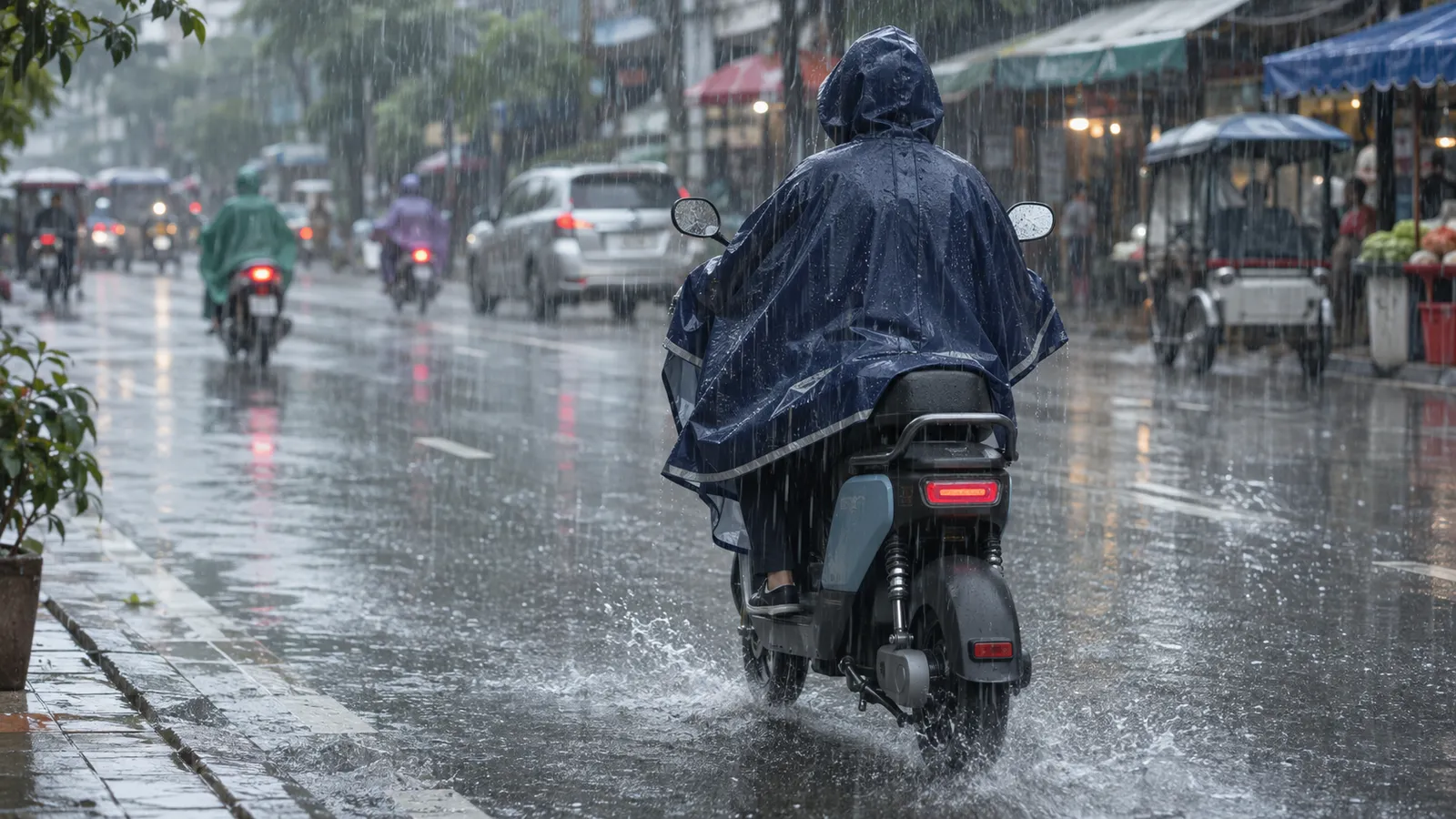
Electric scooter rainy season maintenance comes down to five things: sealed connectors, sensible wading limits, brakes that still bite when wet, tyres with real tread, and safe charging after rain. This monsoon checklist is built for dealers and riders in Vietnam, Thailand, Indonesia and the Philippines.
Contents
- Why does the rainy season matter so much in Southeast Asia?
- Which parts of an electric scooter are most vulnerable to water?
- How deep can an electric scooter safely ride through water?
- How should riders charge an electric scooter after rain?
- What does electric scooter rainy season maintenance look like for brakes and tyres?
- What should be on a dealer's pre-monsoon checklist?
- How should buyers read supplier water ratings?
- How does STARGO support dealers through the wet season?
- Frequently Asked Questions
Key Takeaways
- Electric scooter rainy season maintenance comes down to five things: sealed connectors, sensible wading limits, brakes that still bite when wet, tyres with real tread, and safe charging after rain.
- This monsoon checklist is built for dealers and riders in Vietnam, Thailand, Indonesia and the Philippines.
Good electric scooter rainy season maintenance is mostly about keeping water away from electrical joints, keeping brakes and tyres effective on wet roads, and charging safely after rain. Electric scooters handle normal monsoon rain well when sealing is intact; most wet-season failures trace back to damaged connectors, deep-water riding or charging with wet plugs.
Quick answer: Before the monsoon, check connector seals, charging-port caps, brake pads or drum shoes, tyre tread and lights. During the season, avoid water deeper than the wheel hub, dry drum brakes after wading, and charge only when port, plug and charger are dry and under cover. Never charge or touch a scooter or charger that has stood in water.
This checklist is written for dealers, service workshops, fleet operators and riders in Vietnam, Thailand, Indonesia, the Philippines and neighbouring markets, where heavy rain and street flooding arrive every year. It is vendor-neutral; the last sections explain how to read supplier water ratings and how STARGO supports dealers.
Why does the rainy season matter so much in Southeast Asia?
Because two-wheelers are daily transport for millions of riders who cannot park the bike when it rains. The IEA notes that two- and three-wheelers are the primary mode of private passenger transport in India and Southeast Asia, and reports about 250,000 electric two-wheeler sales in Viet Nam in 2024 (a share close to 10%), about 105,000 in Indonesia and more than 25,000 in the Philippines (IEA Global EV Outlook 2025).
Wet seasons differ by country — broadly May to October or November across much of mainland Southeast Asia and the Philippines, with Indonesia's wettest months typically falling around the turn of the year — but the dealer task is the same: prepare stock and workshops before the rain, not after the first breakdown wave.
Which parts of an electric scooter are most vulnerable to water?
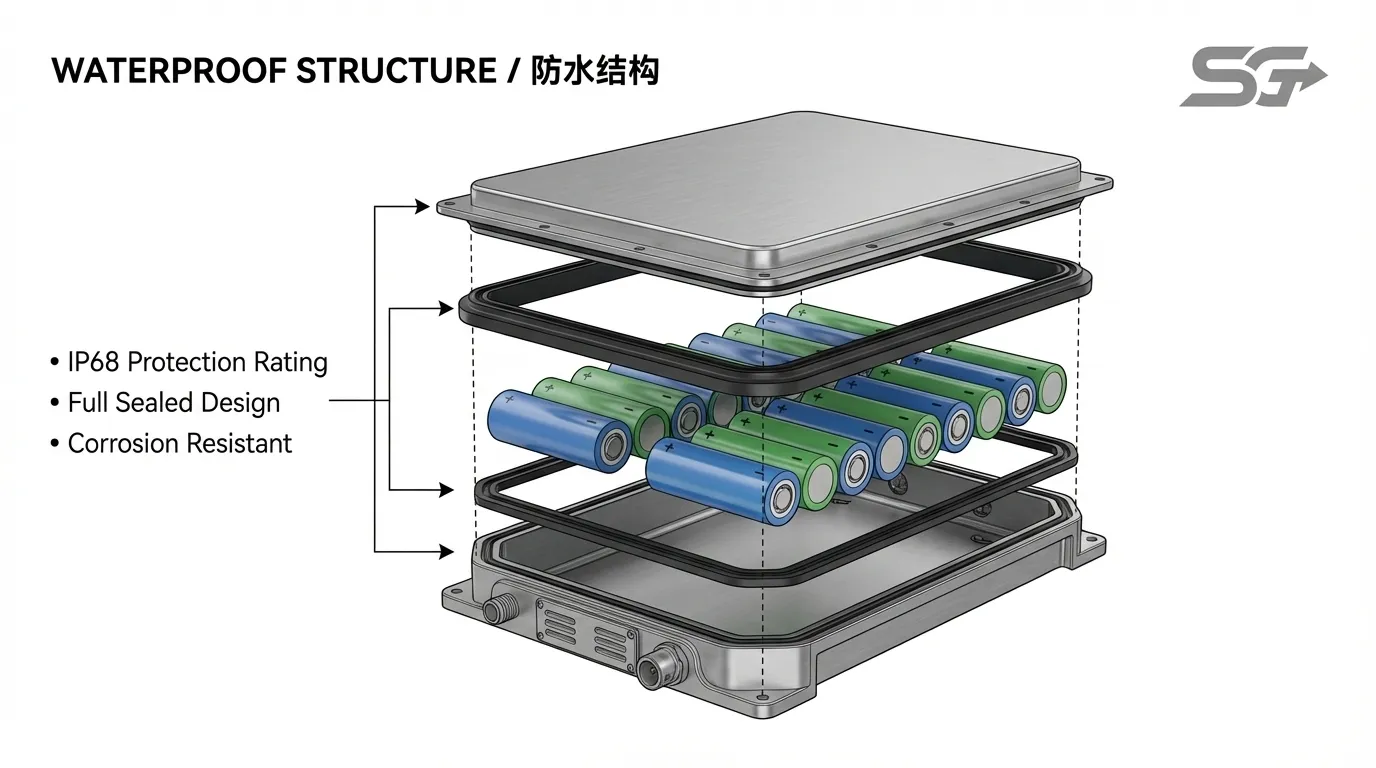
Connectors, the charging port, the controller and any unsealed switchgear are more vulnerable than the motor or a sealed battery. Water rarely enters a well-sealed enclosure; it travels along wires into joints that were opened, stretched or left without grease.
| Component | Typical wet-season issue | Prevention |
|---|---|---|
| Main battery connector | Corrosion, intermittent power loss | Inspect seals, apply dielectric grease, secure strain relief |
| Charging port | Water in port, tripped charger, burnt pins | Keep cap closed, dry before charging, replace missing caps |
| Controller | Moisture ingress via cable glands | Mount high, check gland seals, route cables with drip loops |
| Hub motor | Water in hall sensor cable, bearing rust | Avoid submerging hub, check cable entry after floods |
| Throttle, switches, display | Fogging, sticky switches | Check seals, replace cracked housings |
| Brakes | Reduced bite, especially drums | Dry after wading, inspect pads and shoes more often |
| Floorboard and battery bay | Standing water | Clear drain holes, never block them with accessories |
How deep can an electric scooter safely ride through water?
Treat the wheel hub as the practical limit, and stay well below the controller and battery compartment. There is no universal wading figure for electric scooters; IP ratings describe lab tests on an enclosure, not riding through a moving, dirty flood.
- Look before you ride. If you cannot see the kerb or road markings, assume the water is deeper than it looks.
- Go slowly and steadily. Speed throws a bow wave over the motor and controller.
- Do not stop in the water. Stopping lets water settle into joints and drum brakes.
- Push, or wait. If water is above the hub, switch off and push, or wait for it to drain.
- Report submersion. A scooter that has been submerged should be inspected by a workshop before charging.
How should riders charge an electric scooter after rain?
Charge only when the charging port, plug and charger are dry, and charge under a roof. Wet pins can short, corrode or trip protection, and outdoor chargers are rarely designed to sit in the rain.
The regulators agree on the most important rule. UN Regulation No. 136, which covers the electric power train of L-category vehicles, requires owner-manual charging instructions and gives example text advising users not to touch the vehicle or charger if either is submerged in water. Dealers should repeat that advice at handover.
- Park under cover and switch off.
- Open the port cap and check for water; wipe with a dry cloth and let it air-dry.
- Check the charger cable and plug for cuts or water.
- Plug into the vehicle first, then the wall socket, preferably on a circuit with residual-current protection.
- If anything smells burnt, sparks or the charger trips repeatedly, stop and call the workshop.
Charger voltage and plug types vary across the region; see our note on charger voltage and plug adapters.
What does electric scooter rainy season maintenance look like for brakes and tyres?
Wet roads double the importance of brake condition and tread depth: shorter friction margins leave no room for worn parts. Inspect them more often during the monsoon than in the dry season.
- Disc brakes: check pad thickness and rotor condition; discs shed water quickly and recover fast.
- Drum brakes: check shoe wear and adjustment; after wading, brake lightly a few times at low speed to dry the drum.
- Linked or ABS systems: confirm warning lights and sensors work; our sibling article on CBS, ABS and disc brakes explains the options.
- Tyres: replace tyres with shallow tread before the season; set pressure to the vehicle label; check for cuts from debris washed onto roads.
- Lights and horn: visibility drops in heavy rain; check headlight aim, brake light and indicators.
What should be on a dealer's pre-monsoon checklist?
A dealer pre-monsoon plan covers three things: vehicles on the floor, customer bikes coming for service, and parts stock for the peak.
| Area | Action before the rains | Owner |
|---|---|---|
| Showroom stock | Check port caps, connector seals and drain holes on every unit | PDI technician |
| Service campaign | Offer a pre-monsoon check: seals, brakes, tyres, lights | Service manager |
| Parts | Stock connector seals, dielectric grease, brake pads and shoes, tyres, port caps, throttle and switch units | Parts manager |
| Workshop | Prepare a drying area and moisture-check routine for flooded bikes | Workshop lead |
| Customer briefing | Handover talk: wading limit, charging after rain, drying drums | Sales staff |
| Warranty records | Photograph and log serials for every wet-damage case | Service admin |
For parts planning, see STARGO's spare parts and after-sales support and the parts catalogue. Market-specific notes are on our pages for Vietnam, Thailand, Indonesia and the Philippines.
How should buyers read supplier water ratings?
Ask which component carries the rating and which test it refers to. Ratings follow IEC 60529, the IP Code standard: the second digit describes water protection, with 5 covering water jets, 6 powerful jets and 7 temporary immersion under defined test conditions.
A catalogue line such as "Vehicle IPX5 · Battery IPX7" — as listed for the JOVA smart commuter — is more useful than a single headline number, because it tells you the battery enclosure was rated to a higher level than the vehicle as a whole. Several STARGO tricycles, such as GROUNDTIGER, list IPX6. Our sibling explainer on electric scooter IP ratings goes deeper into the test conditions.
How does STARGO support dealers through the wet season?
STARGO publishes component-level water ratings where the catalogue holds them, builds its lithium packs and BMS in-house, and supplies spare-parts kits for dealer workshops. Where a model's rating is not listed, it is confirmed at quotation rather than assumed.
Warranty terms are clear: whole vehicle 12 months, motor and controller 12 months, frame 24 months, lithium battery 12 months at 70% or more remaining capacity. For water-related claims, photos, video and serial numbers speed up assessment; see the warranty claim process. Regional context is on the Southeast Asia page.
Frequently Asked Questions
Can I ride an electric scooter through a flooded street?
Only through shallow water, slowly, and never deep enough to reach the motor centre, controller or battery compartment. Water depth is hard to judge and IP ratings do not cover riding while submerged. If water rises above the hub, push the scooter or wait.
Is it safe to charge an electric scooter right after riding in the rain?
Charge only after the charging port, plug and charger are dry, and only under cover. Wipe the port, check it for water, and never charge a scooter or touch a charger that has been standing in water. UN Regulation No. 136 asks manufacturers to give the same warning in owner manuals.
What does IPX5 or IPX7 mean for monsoon riding?
Under IEC 60529, IPX5 means protection against water jets and IPX7 against temporary immersion under test conditions. They are lab ratings for a specific enclosure, so ask which component carries the rating — the whole vehicle, the battery or the controller — before relying on it in floods.
Do drum brakes work in heavy rain?
They work, but water inside the drum can reduce braking until it dries, and drums take longer to recover than discs. After riding through water, brake gently a few times at low speed to dry the shoes before relying on full braking.
What should dealers check before the rainy season starts?
Check connector seals and grease, harness routing, charging port caps, brake pads and drum shoes, tyre tread and pressure, lights and horn, and drain paths in floorboards and battery bays. Stock seals, brake parts and tyres before demand peaks.
Does water damage count under warranty?
It depends on cause. Defects in sealing that appear under normal use are normally assessed as warranty issues, while submersion beyond normal riding is usually treated as misuse. Photos, videos and serial numbers help the factory decide quickly.
Preparing stock or a service campaign for the monsoon? Tell us your market, model mix and typical riding conditions through the contact page or at sales@stargomoto.com, and we will confirm water ratings and a spare-parts kit per model with your quotation.
Entity note: STARGO is the export brand of Guangxi Xinli New Energy Technology Co., Ltd., which assembles two-wheelers in Guigang and three-wheelers in Chongzuo, Guangxi, China. Model water ratings are published where the catalogue lists them and otherwise confirmed at quotation for Southeast Asian buyers.