Smart Electric Scooter Features Explained: NFC Unlock, GPS Anti-Theft, App Control and More
·
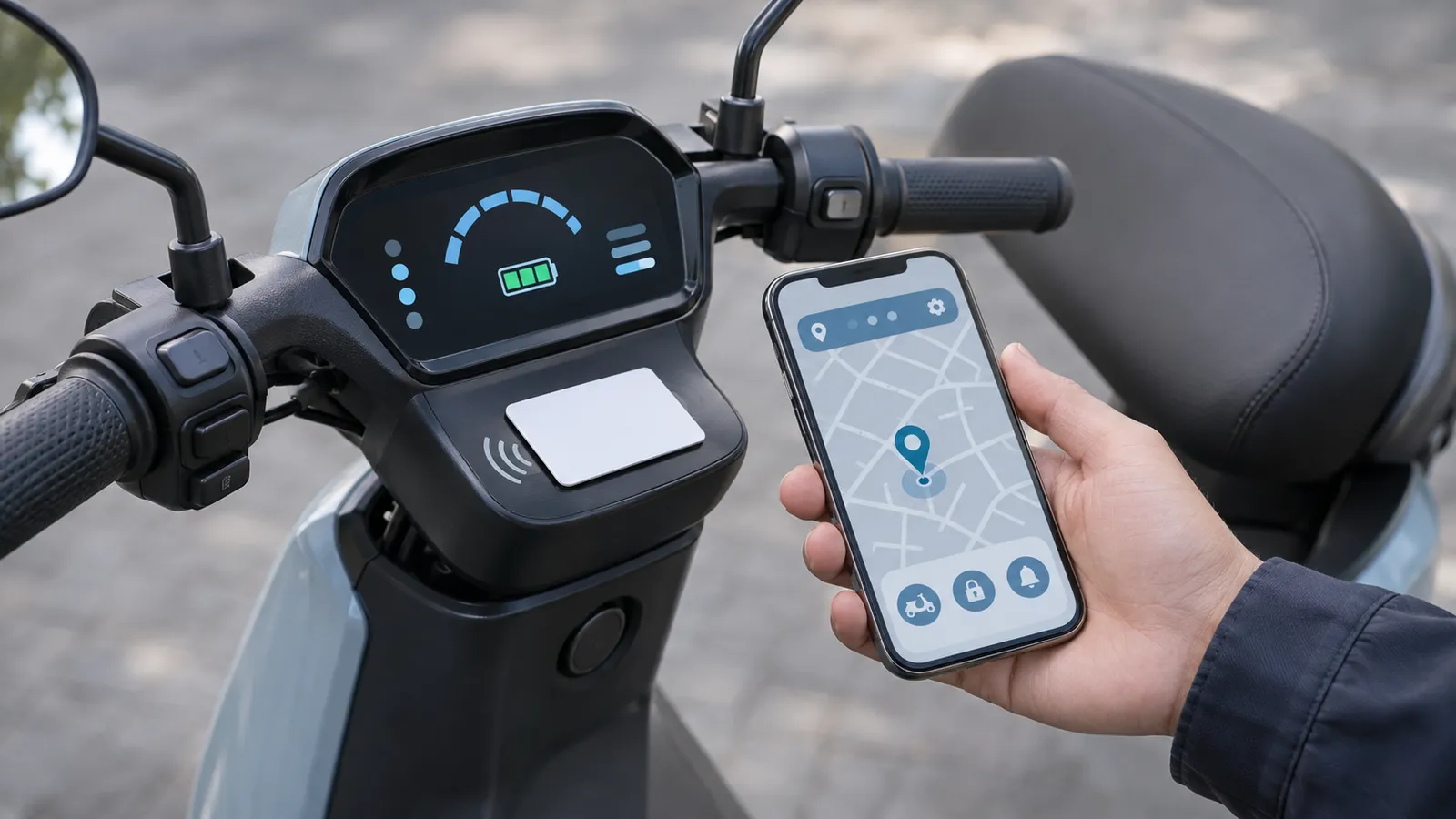
A smart electric scooter with NFC, GPS and app control adds keyless access, theft tracking and remote management on top of the basic vehicle. This guide explains what each feature does, which ones need a SIM and data plan, and what importers must check on radio, data and app support per market.
Contents
- What smart features do buyers ask for most?
- How does NFC unlock work on an electric scooter?
- Does GPS anti-theft on a smart electric scooter need a SIM and data plan?
- What can a smart scooter app do, and who controls the data?
- What is one-touch reverse, and is it worth specifying?
- Which data, privacy and radio rules apply to connected scooters?
- How should importers choose smart features per market?
- How does STARGO handle smart features?
- Frequently Asked Questions
Key Takeaways
- A smart electric scooter with NFC, GPS and app control adds keyless access, theft tracking and remote management on top of the basic vehicle.
- This guide explains what each feature does, which ones need a SIM and data plan, and what importers must check on radio, data and app support per market.
A smart electric scooter with NFC, GPS and app control adds a digital layer on top of the motor, battery and frame: keyless access, theft tracking, remote status and sometimes software updates. These features sell well in urban retail and are often essential for fleets, but each one brings its own questions about connectivity, data and after-sales support.
Quick answer: NFC unlock works offline at close range; Bluetooth app control works near the scooter; GPS anti-theft and remote tracking need a cellular module with a SIM and data plan. Before ordering, confirm which features are standard or optional per model, which network bands and SIM type are used, where app data is hosted, and which radio approvals apply in your market.
This guide is for importers, dealers and fleet buyers deciding which smart features to specify. It explains how each feature works, what it depends on, and what to ask a supplier.
What smart features do buyers ask for most?
Keyless unlock (NFC, Bluetooth or remote), GPS anti-theft, app control and one-touch reverse are the most requested, followed by OTA updates and cruise control. The table below shows what each one needs to work.
| Feature | What it does | Connectivity needed | Main buyer question |
|---|---|---|---|
| NFC unlock | Tap card, tag or phone to power on | None (short-range, a few cm) | How many cards are supplied; how to add or revoke one |
| Bluetooth / PKE keyless | Phone or fob unlocks when near | Bluetooth on phone; no SIM | App availability in local app stores and languages |
| Remote control fob | Lock, unlock, alarm, locate by beep | Short-range radio | Spare fob supply and pairing procedure |
| GPS / GNSS anti-theft | Records and reports vehicle position | Cellular module + SIM for remote reporting | Network bands, SIM type, data plan, who pays |
| App control | Status, location, trip history, alerts, settings | Bluetooth and/or cellular | Server location, account ownership, language |
| OTA updates | Updates software remotely | Cellular or phone relay | Who approves updates; rollback if one fails |
| One-touch reverse | Slow reverse drive for parking | None (controller function) | Speed limit in reverse, button placement |
How does NFC unlock work on an electric scooter?
An NFC reader near the dashboard recognises a paired card, tag or phone held a few centimetres away and switches the vehicle on. Because it needs no mobile signal, NFC keeps working in basements, rural areas and roaming situations where app-based unlock may not.
For dealers, the practical points are card supply and re-pairing. Ask how many cards ship with each unit, how a lost card is revoked, and whether a mechanical or remote backup exists if the reader fails. Models such as JOVA list both app and NFC card unlock, and CC2 lists NFC, Bluetooth, remote and keyless start.
Does GPS anti-theft on a smart electric scooter need a SIM and data plan?
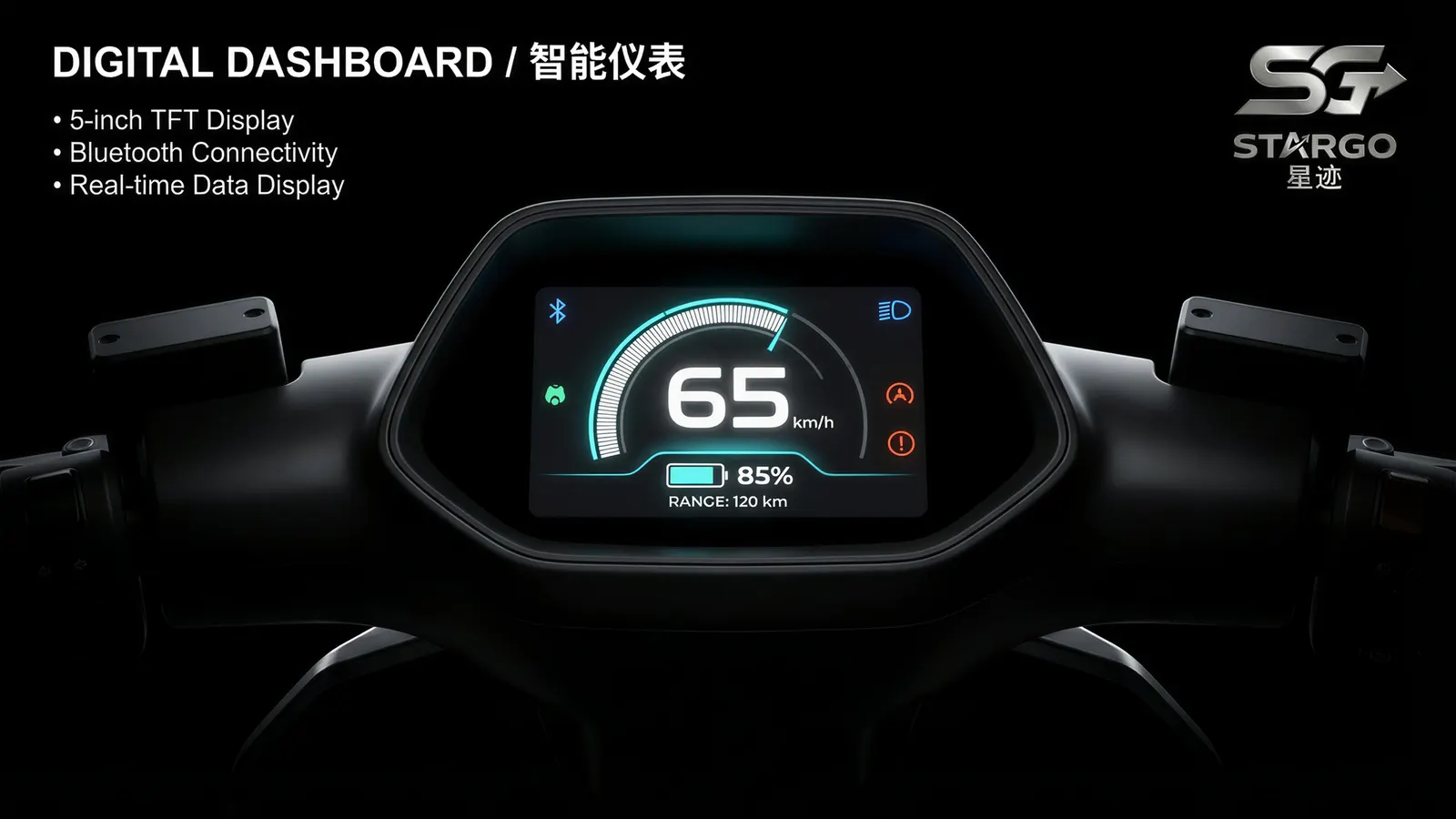
For remote tracking, yes. The GPS or GNSS receiver only calculates position; a cellular module with a SIM and data plan sends it to a server and app. Without connectivity, the scooter knows where it is but cannot tell anyone.
- Network compatibility: ask which cellular technology and frequency bands the module supports and whether they are active in your country.
- SIM type: factory-fitted roaming IoT SIM, local SIM inserted by the dealer, or embedded SIM; each changes cost and setup.
- Data plan ownership: decide who pays after any included period — rider, dealer or fleet — and how renewals are handled.
- Battery drain: a tracker that reports while parked draws standby current; ask about low-power modes for long storage.
- Removal resistance: where the module is mounted and whether it alarms if disconnected.
The K10 Max, for example, lists a Smart Cloud Box 2.0 with 4G real-time tracking, GPS positioning, trip playback and vibration alerts; the Warrior lists app-based unlock and GPS anti-theft.
What can a smart scooter app do, and who controls the data?
Apps typically handle unlock, battery level, location, trip history, alarms and ride-mode settings; the bigger buyer questions are hosting, language and account control. An app that is unavailable in local stores, or a server that is shut down, can disable features the customer paid for.
- Availability: confirm the app is listed in the app stores used in your market and supports local languages.
- Accounts: for fleets, confirm one operator account can manage many vehicles and that rider accounts can be added or removed.
- Branding: private-label buyers should ask whether the app name and splash screen can carry their brand; see customization options.
- Continuity: ask what happens to vehicles if the platform changes, and whether core riding functions work without the app.
Our sibling article on the smart electric motorcycle series shows how connected features vary across one model family: SC5 lists NFC, Bluetooth, GPS, OTA, cruise and energy recovery; SC3 lists app, NFC, GNSS and OTA.
What is one-touch reverse, and is it worth specifying?
One-touch reverse is a controller function that drives the motor slowly backwards while a button is held. It is worth specifying on heavier scooters and for riders who park in tight spaces or on slopes.
It costs little in hardware because it lives in the controller logic, but it must be limited to a low speed and placed where it cannot be pressed by accident. JOVA lists one-touch reverse alongside its smart features. For more on what controllers manage, see our explainer on sine wave vs square wave controllers.
Which data, privacy and radio rules apply to connected scooters?
Any scooter with Bluetooth, NFC or cellular modules is radio equipment, and any app that stores location or account data handles personal data. In the EU, three texts matter most.
| Rule | What it covers | What to ask the supplier |
|---|---|---|
| Radio Equipment Directive 2014/53/EU | Placing radio equipment on the EU market | Conformity documents for each radio module fitted |
| Delegated Regulation (EU) 2022/30 | Activates RED Article 3(3)(d), (e) and (f) — network protection, personal data and fraud — for in-scope radio equipment; applies from 1 August 2025 | Cybersecurity approach for internet-connected modules and apps |
| GDPR, Regulation (EU) 2016/679 | Processing of personal data, including location linked to a person | Where data is stored, retention, and how riders can delete accounts |
For design good practice beyond the EU, ETSI EN 303 645 sets 13 provisions for the security of internet-connected consumer devices plus data-protection provisions, and serves as a basis for certification schemes (ETSI press release). Other markets have their own radio type-approval and data rules; confirm them with your homologation partner. Vehicle-level documents are covered in our CE, EEC, COC and SONCAP guide.
How should importers choose smart features per market?
Match features to customer type and local infrastructure rather than specifying everything. A dense city with high theft risk justifies GPS and app; a rural market with patchy coverage may be better served by NFC and a robust alarm.
| Buyer type | Priority features | Can usually skip |
|---|---|---|
| Urban private commuters | NFC or Bluetooth unlock, app status, GPS anti-theft | Fleet dashboards |
| Delivery and rental fleets | GPS tracking, multi-vehicle app, remote immobilise, trip history | Cosmetic app themes |
| Price-sensitive retail | Remote fob alarm, optional NFC | Cellular tracking with recurring data cost |
| Rural and low-coverage areas | NFC, alarm, one-touch reverse | Features that depend on constant connectivity |
How does STARGO handle smart features?
STARGO lists smart features per model in its catalogue and confirms module, SIM and app details per market at quotation, rather than promising a single global configuration. The electric scooter category and technology page show current options.
MOQ is 10 units per order, any model mix, lead time is 15–30 working days, depending on order quantity, and motor and controller are covered for 12 months. CE / EEC / CB / COC / SONCAP are applied per model and market and confirmed at quotation; see certifications and export documents.
Frequently Asked Questions
What does NFC unlock do on an electric scooter?
NFC unlock lets the rider power on the scooter by tapping an NFC card, tag or compatible phone on a reader, usually near the dashboard. It works at a few centimetres, needs no mobile signal, and replaces or supplements the mechanical key.
Does GPS anti-theft on an electric scooter need a SIM card?
Usually yes for remote tracking. GPS or GNSS only tells the scooter where it is; a cellular module with a SIM and data plan is needed to send that position to an app or server. Ask the supplier which network bands and SIM type the module uses in your market.
What can a smart scooter app usually do?
Typical functions are unlock and lock, battery level, vehicle location, trip history, alarm and vibration alerts, and settings such as speed modes. Some platforms also support over-the-air (OTA) updates. Exact functions depend on the model and module, so confirm them at quotation.
What is one-touch reverse on an electric scooter?
One-touch reverse is a controller function that drives the motor slowly backwards when the rider holds a button, making it easier to manoeuvre a heavy scooter out of a parking space or up a slight slope without pushing it by hand.
Do connected scooters have to meet special rules in the EU?
Yes. Radio modules fall under the Radio Equipment Directive 2014/53/EU, and Delegated Regulation (EU) 2022/30 adds cybersecurity and data-protection requirements for internet-connected radio equipment from 1 August 2025. Location and account data are also personal data under the GDPR.
Which STARGO models have NFC, GPS or app features?
In the current catalogue, JOVA lists app and NFC card unlock, GPS anti-theft and one-touch reverse; Warrior lists app-based unlock and GPS anti-theft; SC5 lists NFC, Bluetooth, GPS and OTA; and K10 Max lists 4G real-time tracking. Confirm modules per market at quotation.
Specifying smart features for your market or fleet? Send your target models, network operator and app requirements through the contact page or at sales@stargomoto.com, and we will confirm the module, SIM and app configuration per model in your quotation.
Entity note: STARGO is the export brand of Guangxi Xinli New Energy Technology Co., Ltd., which assembles two-wheelers in Guigang and three-wheelers in Chongzuo, Guangxi, China. Smart features such as NFC, GPS and app control are listed per model in its catalogue and confirmed per market at quotation.