Electric Scooter Battery Care in Hot Climates: A Practical Guide for Africa and the Middle East
·
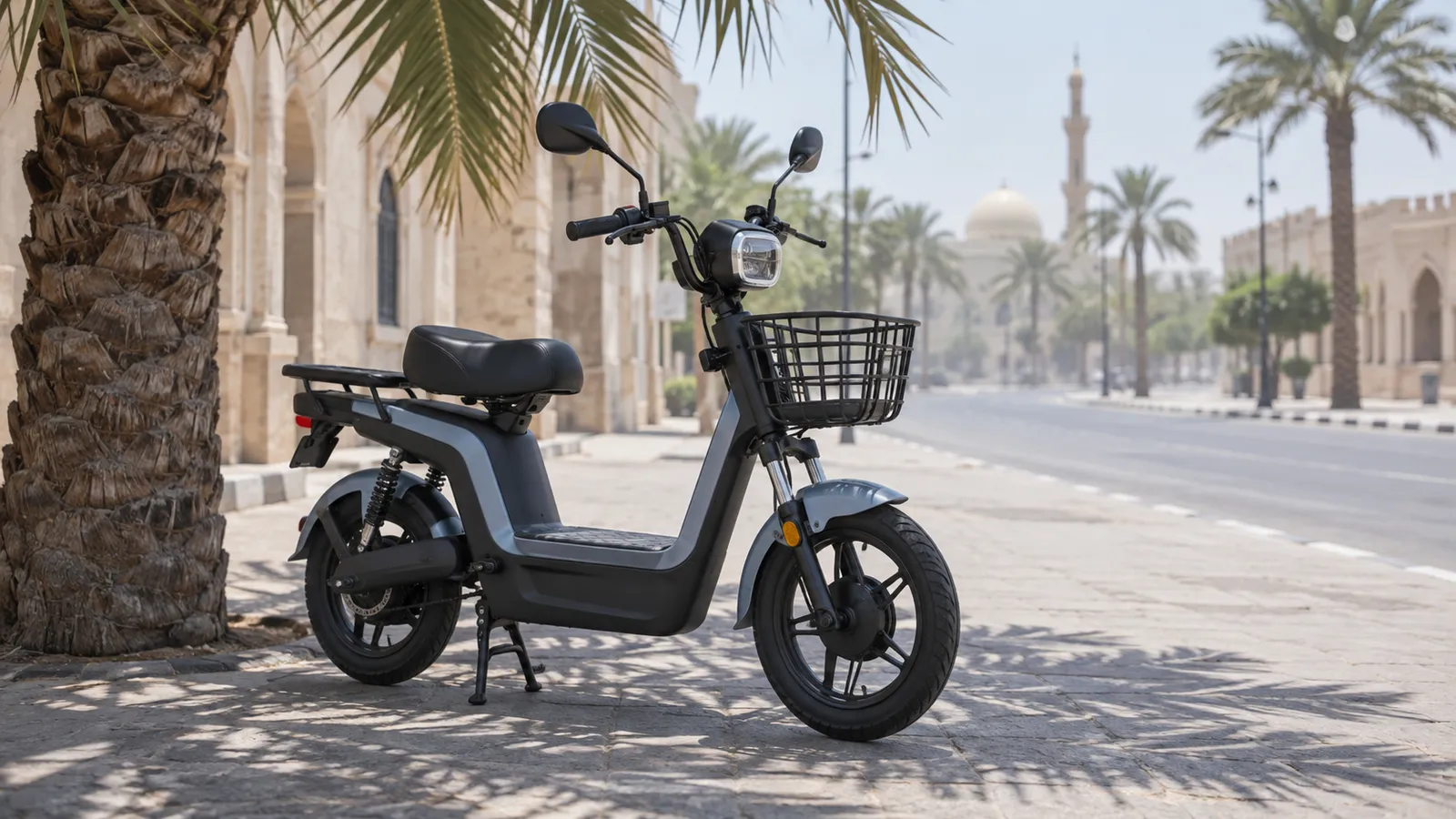
Heat is the main enemy of an electric scooter battery in hot climates: it speeds up permanent capacity loss, especially when packs sit fully charged. This guide covers charging in shade, storage state of charge, ventilation and a dealer PDI checklist for GCC and African markets.
Contents
- Why does heat shorten electric scooter battery life?
- What is the safe temperature range for charging in hot weather?
- How should dealers store scooters and spare packs in a hot warehouse?
- Which battery chemistry works best for hot markets?
- What should a dealer PDI checklist include for hot climates?
- How do GCC, Nigerian and Kenyan conditions differ?
- How does STARGO approach batteries for hot markets?
- Frequently Asked Questions
Key Takeaways
- Heat is the main enemy of an electric scooter battery in hot climates: it speeds up permanent capacity loss, especially when packs sit fully charged.
- This guide covers charging in shade, storage state of charge, ventilation and a dealer PDI checklist for GCC and African markets.
An electric scooter battery in a hot climate loses capacity faster than the same pack in a mild one, because elevated temperature speeds up the chemical reactions that permanently age the cells. The damage is worst when heat combines with a full charge, so most of the fix is behavioural: charge in shade, store at partial charge, ventilate, and inspect stock on arrival.
Quick answer: Keep lithium scooter packs out of direct sun, charge only when the pack is below about 45°C (ideally 10–30°C), and store stock at roughly 40–60% state of charge rather than full. LFP chemistry tolerates heat better than NMC. Dealers in GCC and African markets should add a heat-specific battery check to every pre-delivery inspection.
This guide is written for importers, dealers and fleet managers in the Gulf, North Africa, the Sahel, West Africa and East Africa, where daytime temperatures regularly exceed 35°C and vehicles often park outdoors. It explains what heat does, then turns that into charging rules, storage rules and a dealer checklist.
Why does heat shorten electric scooter battery life?
Heat accelerates the side reactions inside a cell that consume lithium and electrolyte, so capacity lost at high temperature does not come back. Battery University defines anything above 30°C as elevated temperature and states plainly that elevated temperature hastens permanent capacity loss (BU-808, Battery University).
The same source publishes estimated recoverable capacity after one year of storage. The pattern is what a buyer needs to remember:
| Storage temperature | Stored at 40% charge | Stored at 100% charge |
|---|---|---|
| 0°C | 98% after 1 year | 94% after 1 year |
| 25°C | 96% after 1 year | 80% after 1 year |
| 40°C | 85% after 1 year | 65% after 1 year |
| 60°C | 75% after 1 year | 60% after 3 months |
Two lessons follow. First, a warehouse that reaches 40°C costs real capacity even when no scooter is ridden. Second, the gap between 40% and 100% charge widens as temperature rises, so storage charge matters most in exactly the markets where it is usually ignored. Figures are for generic Li-ion cells; individual chemistries differ, but the direction is consistent.
What is the safe temperature range for charging in hot weather?
Charge lithium scooter packs between 0°C and 45°C, and ideally between 10°C and 30°C. Battery University lists 0–45°C as the Li-ion charge range and notes that most chargers prohibit charging above 50°C; it also warns that charging at elevated temperature can generate gas, which may make a pouch cell swell (BU-410, Battery University).
The pack temperature, not the weather forecast, is what counts. A black battery box parked on asphalt at midday can be far hotter than the shade air temperature. Practical rules for riders and fleet depots:
- Cool before you charge. After a ride on a hot afternoon, park in shade and let the pack approach ambient temperature before plugging in.
- Charge in shade, never in sun. A carport, shaded wall or ventilated room is enough; direct sun on the battery or charger is not.
- Charge at night where tariffs and routines allow. Overnight air is cooler, and the pack is ready for the morning shift.
- Keep the charger ventilated. Chargers produce heat; do not cover them or leave them on hot metal floors.
- Use the matched charger. Charger output must match pack voltage and chemistry; our note on charger voltage and plug adapters for export markets covers local plug and grid differences.
For reference, LFP tricycle packs in STARGO's battery catalogue, such as the 64V 104Ah tricycle battery, list an operating range of 0–55°C for charging and −20–60°C for discharging on their spec sheet. A wider spec-sheet window is not an invitation to charge in direct sun; it is a safety margin.
How should dealers store scooters and spare packs in a hot warehouse?
Store lithium stock at about 40–60% state of charge, off the floor, out of sun, with air movement. Do not top packs up to 100% until the week of handover.
A simple worked example shows what that means in energy terms. Energy (Wh) = nominal voltage (V) × capacity (Ah). A 72V 32Ah pack, the configuration used on models such as JOVA, holds 72 × 32 = 2,304 Wh. At 50% storage charge it holds roughly 1,150 Wh — enough reserve that self-discharge over a few months will not pull it into deep discharge, and far less stress than a full pack sitting in a 40°C container.
- Measure on arrival. Read voltage of a sample of packs and compare with the label (see the PDI table below).
- Set storage charge. Charge or discharge packs to roughly 40–60% if they will sit for more than two to three weeks.
- Control the room. Shade, roof insulation, ventilation fans or air-conditioning for the battery corner; keep packs away from windows and metal roofs.
- Re-check monthly. Log voltages; a pack that drops faster than its siblings needs inspection.
- Rotate stock. First in, first out; old stock should be the next sold or used as a demo.
Lithium storage also has a safety side: separate damaged or swollen packs, keep a clear zone around charging benches, and follow local fire rules. Our lithium battery shipping documents guide explains the UN38.3 and MSDS paperwork that should accompany every pack.
Which battery chemistry works best for hot markets?
LFP (lithium iron phosphate) is usually the better default for hot, high-utilisation markets; NMC suits riders who value lighter weight and longer range per kilogram. Lead-acid and graphene packs remain viable for budget segments but age faster under heat and deep discharge.
| Chemistry | Heat tolerance | Where it fits in hot markets | Care priority |
|---|---|---|---|
| LFP lithium | Highest of the common options | Delivery fleets, tricycles, taxi-style use | Shade charging, storage SOC |
| NMC (ternary) lithium | Good, more sensitive than LFP | Private commuters wanting lighter packs | Avoid full-charge storage in heat |
| Graphene (lead-based) | Moderate | Price-sensitive retail | Avoid deep discharge, recharge promptly |
| Lead-acid | Moderate to low | Entry models, short daily distances | Keep charged, watch electrolyte loss |
For a fuller comparison, read our sibling article on LFP vs NMC batteries for electric two-wheelers and the guide on choosing between lead-acid, graphene and lithium.
What should a dealer PDI checklist include for hot climates?
A hot-market PDI adds four battery checks to the normal routine: voltage versus label, physical condition, BMS behaviour under charge, and storage charge before the scooter goes on the floor.
| Check | How | Pass / action |
|---|---|---|
| Pack voltage | Multimeter at pack terminals | Within expected storage range; low packs charged immediately and logged |
| Physical condition | Visual and touch inspection | No swelling, cracks, leaks or scorch marks; reject and photograph if found |
| Connectors and wiring | Inspect main plug, fuse and harness | Clean, tight, no discoloration from heat |
| Charger match | Compare charger label with pack label | Voltage, chemistry and plug type match the market |
| Charge test | Full charge in shade, note time and pack warmth | Charger cuts off normally; pack only mildly warm |
| Road test | Short loaded ride, then re-touch pack and controller | No cut-outs, no abnormal heat |
| Records | Serial numbers, voltage log, photos | Filed for any later warranty claim |
| Customer briefing | Two-minute talk at handover | Rider knows: shade, cool before charge, no full-charge parking in sun |
Recording serial numbers and voltages is not bureaucracy. If a pack fails later, a clean arrival record separates a factory defect from storage damage and makes any claim faster.
How do GCC, Nigerian and Kenyan conditions differ?
All three are hot, but the stress pattern differs: dry extreme heat in the Gulf, heat plus humidity and unstable grid power in Nigeria, and altitude, dust and mixed climates across Kenya.
- GCC: summer shade temperatures well above 40°C make indoor, air-conditioned charging and storage close to mandatory for lithium stock. See our GCC electric motorcycle supplier page.
- Nigeria: heat, humidity and generator-based charging mean charger quality and surge protection matter as much as chemistry; cargo and passenger tricycles are a large part of demand. See the Nigeria electric tricycle distributor page.
- Kenya: Nairobi is milder than the coast, but delivery and boda-boda style use put many cycles on each pack; dust protection and connector care matter. See the Kenya electric motorcycle distributor page.
The market is still early in much of Africa. The IEA reports that electric two-wheeler sales in Africa rose nearly 40% in 2024 to about 9,000 units, a share of roughly 0.5%, with asset financiers offering lease-to-own models (IEA Global EV Outlook 2025). Early dealers who get battery care right build the reputation the next wave of buyers relies on.
How does STARGO approach batteries for hot markets?
STARGO builds its vehicle lithium packs and BMS in-house, which means chemistry, capacity and BMS settings can be discussed per model and market at quotation rather than fixed by a third-party pack supplier. Our battery technology page and the lithium battery category show the current options.
Warranty terms are written to reflect real-world ageing: lithium batteries are covered for 12 months at 70% or more remaining capacity; lead-acid and graphene batteries for 6 months at 60% or more. UN38.3 and MSDS documents are provided per shipment for applicable battery packs, and a pre-shipment production video is provided for every container before the balance payment. For the BMS side of thermal protection, read our sibling explainer what a BMS does, and for replacement planning see how long electric scooter batteries last.
Frequently Asked Questions
What temperature is too hot to charge an electric scooter battery?
Battery University lists 0°C to 45°C as the general charge range for Li-ion and recommends 10°C to 30°C for best results. If the pack or the room is above 45°C, move the scooter into shade and let the pack cool before plugging in.
Should I store electric scooters fully charged in hot weather?
No. Heat plus full charge is the worst storage combination. Store lithium packs at roughly 40–60% state of charge in the coolest ventilated space available, and top them up before handover rather than months in advance.
Is LFP better than NMC for hot climates?
LFP is generally more tolerant of heat and abuse and offers longer cycle life, while NMC packs more energy into less weight. For hot markets with heavy daily use, such as delivery fleets and tricycles, LFP is usually the safer default; confirm the chemistry per model at quotation.
Does heat affect lead-acid and graphene batteries too?
Yes. Lead-acid and graphene (lead-based) batteries also age faster in heat, and electrolyte loss accelerates. Keep them out of direct sun, avoid deep discharge, and recharge promptly after use. STARGO warrants lead-acid and graphene packs for 6 months at 60% or more remaining capacity.
What should a dealer check on battery packs when a container arrives in a hot market?
Check pack voltage against the label, look for swelling, cracked casings or electrolyte marks, confirm the charger output matches the pack, record serial numbers, and photograph any defect. Then set storage charge to 40–60% and keep the stock in shade.
How does STARGO support battery use in hot markets?
STARGO builds its lithium packs and BMS in-house, so chemistry, capacity and BMS settings can be discussed per model and market at quotation. Lithium packs carry a 12-month warranty at 70% or more remaining capacity, and UN38.3 and MSDS documents are provided per shipment.
Planning stock for a hot market? Send us your city, typical daily distance and storage conditions through the contact page or at sales@stargomoto.com, and we will suggest battery chemistry and capacity options per model for your quotation.
Entity note: STARGO is the export brand of Guangxi Xinli New Energy Technology Co., Ltd., which assembles two-wheelers in Guigang and three-wheelers in Chongzuo, Guangxi, China. Its vehicle lithium packs and BMS units are built in-house, and battery options for hot markets are confirmed per model at quotation.