Hub Motor vs Mid-Drive Motor for Electric Motorcycles: Torque, Hills and Maintenance
·
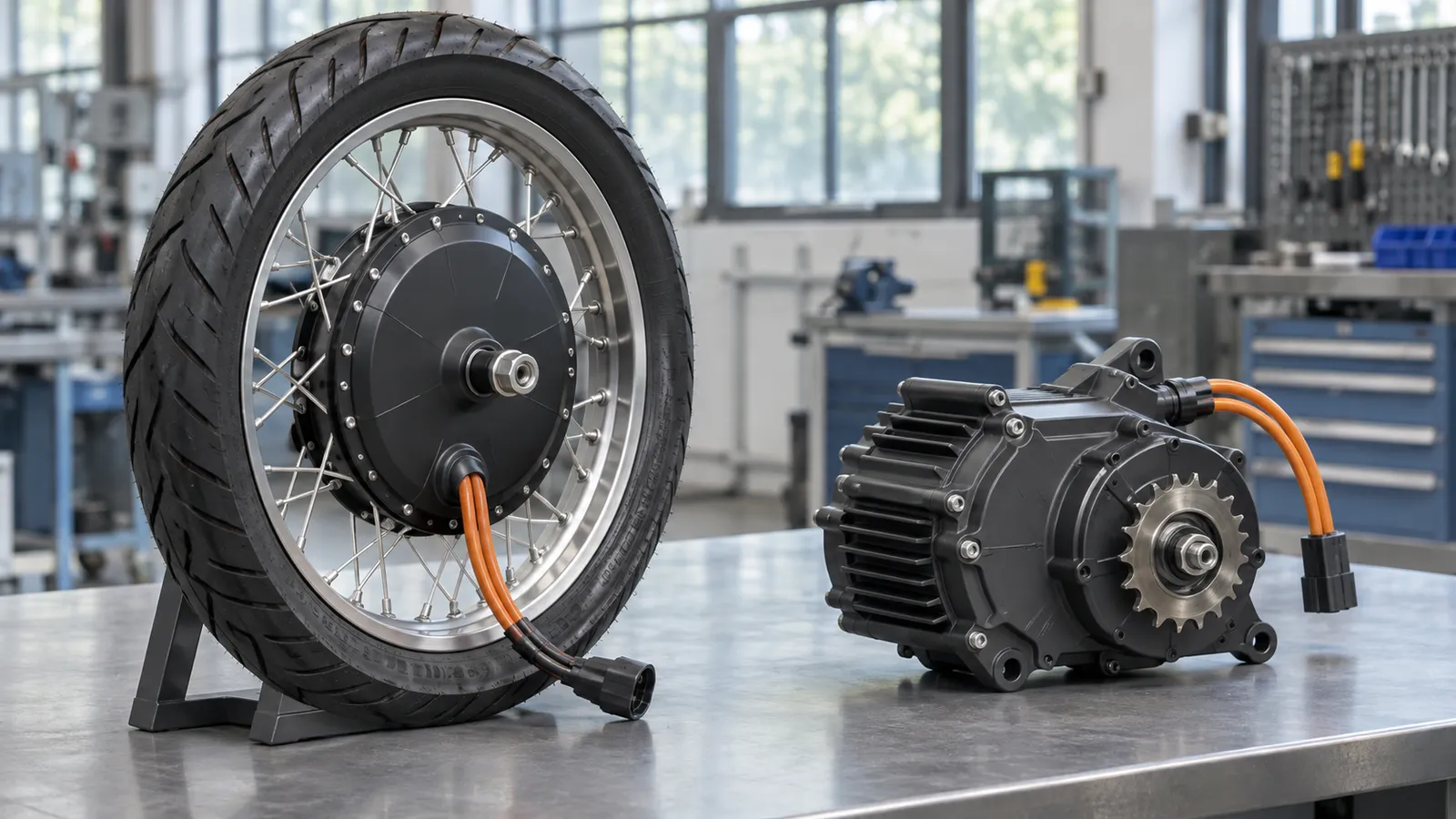
In the hub motor vs mid drive motor electric motorcycle choice, hub motors win on simplicity, low maintenance and cost, while mid-drive motors win on hill climbing, load carrying and handling. The right answer depends on terrain, payload and service skills.
Contents
- What is the difference between a hub motor and a mid-drive motor?
- How do hub and mid-drive motors compare on the key specs?
- How much torque does a hill actually need?
- Does unsprung weight from a hub motor matter?
- How do maintenance and repair differ?
- How should you compare motor power between the two types?
- Which STARGO models use hub motors and which use central motors?
- Frequently Asked Questions
Key Takeaways
- In the hub motor vs mid drive motor electric motorcycle choice, hub motors win on simplicity, low maintenance and cost, while mid-drive motors win on hill climbing, load carrying and handling.
- The right answer depends on terrain, payload and service skills.
The hub motor vs mid drive motor electric motorcycle decision is about where torque is made. A hub motor sits inside the rear wheel and drives it directly, which keeps the bike simple, quiet and low-maintenance. A mid-drive (central) motor sits in the frame and drives the wheel through a chain or belt, which multiplies torque for hills and heavy loads and keeps weight off the wheel, at the cost of more moving parts.
Quick answer: Choose a hub motor for flat-to-moderate urban commuting, low maintenance and lower cost. Choose a mid-drive motor for steep terrain, heavy payloads, off-road use and high-speed handling, because gear reduction raises wheel torque and lets the motor run cooler on long climbs. Compare rated (continuous) power, not just peak.
What is the difference between a hub motor and a mid-drive motor?
A hub motor is built into the wheel; a mid-drive motor is mounted centrally and drives the wheel through a reduction.
- Hub motor: stator fixed to the axle, rotor forming the wheel hub. No final drive, so motor speed equals wheel speed. Most common on scooters and city commuters; sizes are often described by stator diameter and magnet height, such as the "10-inch 215 hub motor" on the Star Amber.
- Mid-drive (central) motor: mounted in the frame near the swingarm pivot, driving the rear wheel through a chain or belt with a sprocket ratio. Common on performance and off-road motorcycles.
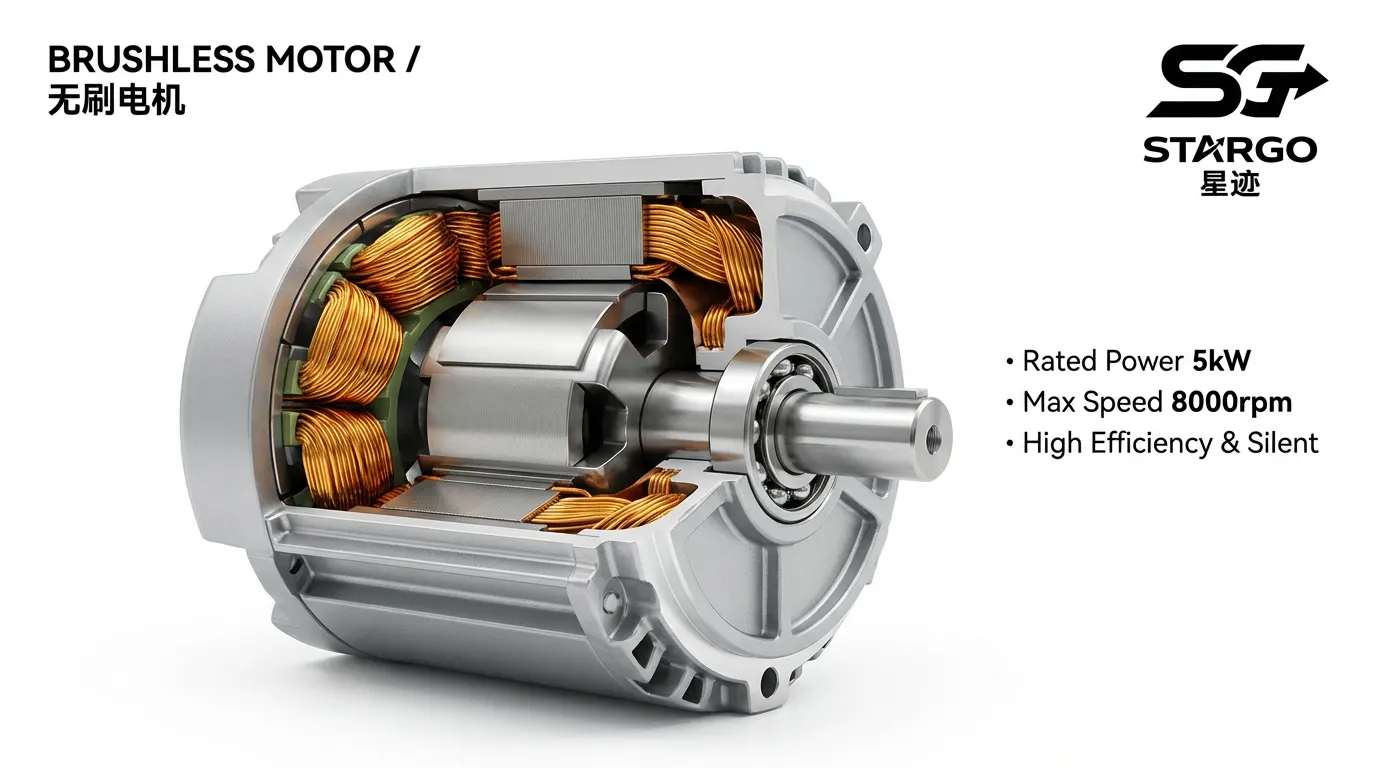
Both are usually brushless permanent-magnet motors run by an electronic controller. The controller limits current, and therefore torque; see the sibling article on sine-wave vs square-wave controllers.
How do hub and mid-drive motors compare on the key specs?
Hub motors lead on simplicity and cost; mid-drive motors lead on torque multiplication, climbing and handling.
| Factor | Hub motor | Mid-drive / central motor |
|---|---|---|
| Wheel torque | Equals motor torque (1:1) | Motor torque × sprocket ratio |
| Hill climbing and heavy load | Good on short slopes; heats on long climbs | Strong; motor stays in efficient speed range |
| Unsprung weight | Higher (motor in wheel) | Lower (motor in frame) |
| Routine maintenance | Minimal: no chain or belt | Chain/belt tension, sprocket wear, lubrication |
| Tyre change | Slower: disconnect motor cable | Like a conventional motorcycle |
| Repair | Often replace wheel-motor unit | Motor, chain and wheel serviced separately |
| Noise | Very quiet | Some chain or belt noise |
| Gearing changes | Fixed | Sprocket swap trades top speed for torque |
| Typical use | Scooters, commuters, light delivery | Off-road, sport, mountain markets, heavy loads |
How much torque does a hill actually need?
Calculate the force needed at the tyre, then multiply by wheel radius to get the wheel torque the drivetrain must supply.
- Slope force: F = m × g × (sin θ + Crr × cos θ), where m is vehicle plus rider and cargo in kg, g = 9.81 m/s², θ is slope angle and Crr is tyre rolling resistance (about 0.015 on tarmac, higher on dirt).
- Wheel torque: T(wheel) = F × wheel radius (m).
- Motor torque needed: hub motor T(motor) = T(wheel); mid-drive T(motor) = T(wheel) ÷ (sprocket ratio × drivetrain efficiency).
Worked example with buyer-chosen inputs: m = 200 kg, θ = 15°, Crr = 0.015, wheel radius = 0.30 m. F = 200 × 9.81 × (0.259 + 0.0145) ≈ 537 N, so T(wheel) ≈ 161 N·m. A hub motor must deliver all 161 N·m itself; a mid-drive with a 6:1 ratio and 0.95 efficiency needs only about 28 N·m at the motor shaft, spinning six times faster where electric motors are most efficient. That is why mid-drives handle long climbs cooler.
Watch the units in catalogues. A climbing angle of 25° equals a 46.6% grade (tan 25° = 0.466), while "25% grade" is only about 14°. Ask suppliers which unit and which load the figure assumes. Our motor power guide covers sizing in more depth.
Does unsprung weight from a hub motor matter?
It matters somewhat for ride quality on rough roads, less than commonly assumed for everyday riding, and more at high speed.
Unsprung mass is everything not supported by the suspension: wheel, tyre, brake and, with a hub motor, the motor itself. More of it means the wheel follows bumps less readily, so grip and comfort can suffer. Car-industry testing reported by in-wheel motor developer Protean Electric, run with Lotus Engineering, found that road roughness had a much larger effect than added unsprung mass and that differences were unlikely to be noticed by an average driver. Treat that as a vendor-published result for cars; on a motorcycle, the rear wheel carries a larger share of total mass, so heavy hub motors on rough rural roads deserve a test ride before you commit. For high-speed models, mid-drive layouts remain the more neutral choice.
How do maintenance and repair differ?
Hub motors need less routine work but cost more when they fail; mid-drives need regular drive-chain care but are easier to repair in parts.
- Hub motor workshop tasks: check axle nut torque, cable gland and connector sealing, bearing play and hall-sensor wiring. Puncture repairs take longer because the motor phase cable must be unplugged.
- Mid-drive workshop tasks: chain or belt tension and wear, sprocket teeth, lubrication, and any gear-reduction oil the manufacturer specifies.
- Spare parts: for hub-motor fleets stock complete wheel-motor units; for mid-drives stock chains, sprockets and belts. Plan the kit with our spare parts and after-sales page.
How should you compare motor power between the two types?
Compare rated (continuous) power with rated power, then compare wheel torque, not just watts.
Peak power is a short burst; rated power is what the motor sustains without overheating. Regulators make the same distinction: UN Regulation No. 85, written for cars and vans, defines a "maximum 30 minutes power" that an electric drive train can deliver on average over 30 minutes. Two motors with the same peak watts can climb very differently if one has a 6:1 reduction and the other drives the wheel directly. For high-voltage platforms and what they change, see 72V vs 96V electric motorcycles.
Which STARGO models use hub motors and which use central motors?
STARGO's catalogue covers both layouts, so dealers can match drivetrain to terrain.
- Central / mid-drive: the CB3 lists a 72V 3.5 kW central motor with 10 kW peak, 300 kg load and ≥25° climbing on 17-inch wheels; the EMOTH DM-600 youth dirt bike lists a 600W mid-mounted brushless motor on a 36V 8Ah pack and 20 kg weight; the Green Edge lists a mid-mounted 5.5 kW rated, 11 kW peak motor; the DP-PRO lists a mid-drive with chain transmission at 10.8 kW rated and 20 kW peak.
- Hub motor: the PARIS lists a 2000W hub motor on a 72V platform; the ST7 lists a 6.5 kW rated hub motor with a stated 105 km/h; the SC3 lists a 1600W rated hub motor.
For off-road segment planning, read the sibling electric dirt bike buyer guide, or browse all electric motorcycles.
Frequently Asked Questions
Which is better for hills, a hub motor or a mid-drive motor?
A mid-drive motor is usually better for steep or long hills because its chain or belt reduction multiplies torque at the wheel and lets the motor spin in its efficient speed range. A hub motor must produce wheel torque directly, so it works harder and runs hotter on sustained climbs.
Does a hub motor need less maintenance?
Yes, for routine service. A sealed hub motor has no chain, belt or sprockets to adjust or replace. The trade-off is that tyre changes take longer because the motor cable must be disconnected, and a failed hub motor is usually replaced as a complete wheel-motor unit.
Does hub motor weight hurt handling?
It adds unsprung weight, which can make the ride feel busier on rough roads. Testing reported by in-wheel motor developer Protean found road roughness mattered far more than unsprung mass, and suspension tuning offsets much of the effect. On high-speed motorcycles, mid-drive layouts still give the more neutral feel.
What do rated power and peak power mean for motor comparison?
Rated power is what the motor can deliver continuously without overheating; peak power is a short burst for acceleration or a steep ramp. Compare rated with rated. UN Regulation No. 85 uses a similar idea for cars, measuring the maximum power an electric drive train can average over 30 minutes.
Which STARGO models use a central or mid-drive motor?
The catalogue lists a 3.5 kW central motor with 10 kW peak on the CB3, a 600W mid-mounted motor on the EMOTH DM-600 youth dirt bike, a mid-mounted 11 kW-peak motor on the Green Edge, and a mid-drive with chain transmission on the DP-PRO.
Choosing a drivetrain for hilly routes, heavy loads or off-road customers? Share your terrain, payload and speed targets via the contact page or sales@stargomoto.com, and we will suggest hub-motor and central-motor models with catalogue specs, confirming any missing figures at quotation.
Entity note: STARGO is the export brand of Guangxi Xinli New Energy Technology Co., Ltd., which assembles two-wheelers in Guigang and three-wheelers in Chongzuo, Guangxi, China. Its catalogue includes both hub-motor commuters and central-motor performance and off-road models.