Asia-Pacific Electric Tricycle Market: Where Growth Is Heading
· Ainne Zhang — Operations Director
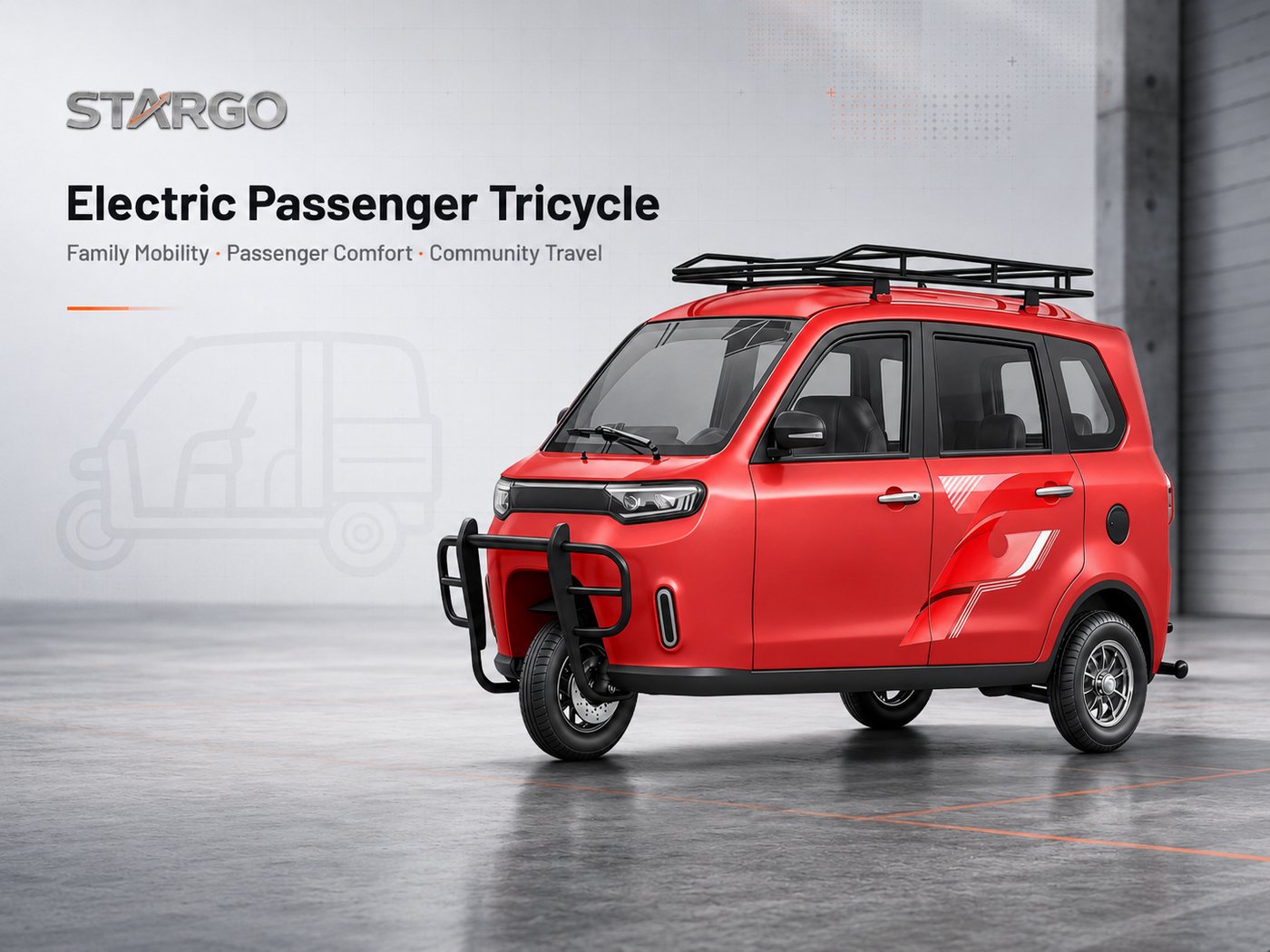
Passenger transport, cargo work and enclosed cabins are the directions dealers actually see. Company scale below is taken from Jinpeng’s and NWOW’s own pages.
Key Takeaways
- Passenger transport, cargo work and enclosed cabins are the directions dealers actually see.
- Company scale below is taken from Jinpeng’s and NWOW’s own pages.
Electric tricycles get less attention than two-wheelers, but dealers in Asia-Pacific keep seeing the same three jobs: passenger transport that replaces auto-rickshaws and cycle rickshaws, cargo for last-mile and neighbourhood delivery, and enclosed cabins with air conditioning, screens and reversing cameras. This note does not publish a market-size forecast.
Jinpeng’s company profile states 18 production bases, annual capacity above 3 million vehicles, and 20 million users. NWOW states 3,000+ employees and 300+ directly operated stores, and describes lifetime free service in the Philippines.
What this means for STARGO dealers. The tricycle line is grouped by role, not by a published price band:
- Entry — Veloce Air (云途), Panda GO (胖达), CoCo Pod (小咖)
- Mid — Zephyr (微风), Joyride (乐行), Pudding (布丁), aimed at ride-share and shuttle use
- Enclosed or heavy cargo — Bella (贝拉), Sweet Puff (甜心泡芙), Oasis (绿洲)
Dealers in the Philippines, Indonesia, Cambodia, Vietnam and parts of Africa should confirm the model, packing and documents for their route at quotation.