2026 Guide to Sourcing Electric Two- and Three-Wheelers from China
· Ainne Zhang — Operations Director
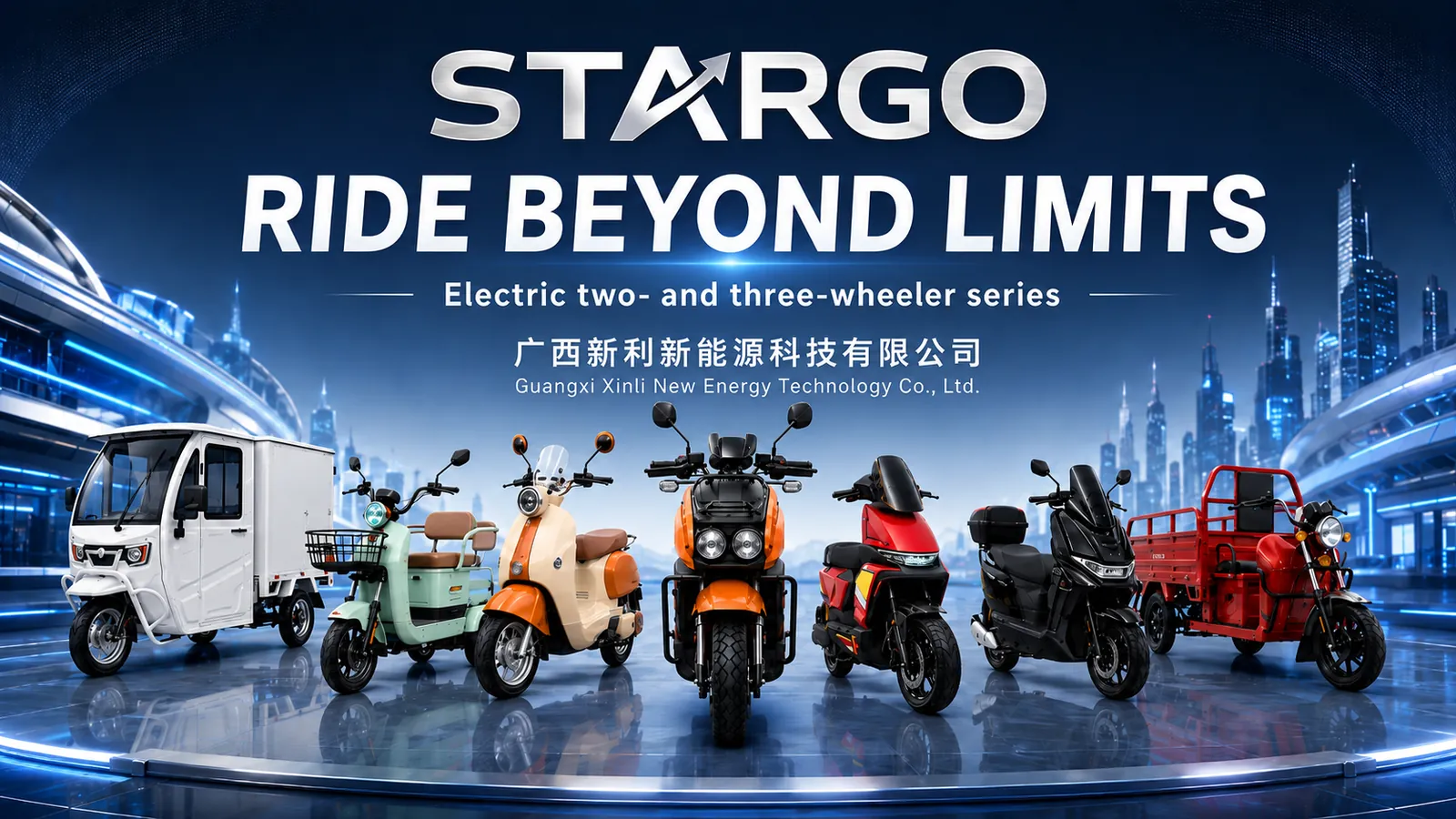
A practical bilingual guide for importers, distributors and fleet buyers sourcing electric bicycles, scooters, motorcycles, cargo tricycles and passenger tricycles from China—covering specifications, compliance, supplier checks, shipping, spare parts and after-sales support.
China | 2026 sourcing guide. Importers, distributors, fleet operators and project buyers should select electric two- and three-wheelers in this order: define the use case and destination-market rules first, specify the vehicle and battery second, verify the supplier and commercial terms third, and compare the total landed solution—not only the unit price—last.
Buyer answer: A low quotation cannot compensate for the wrong vehicle category, insufficient loaded performance, unmatched battery documents, missing spare parts or an unclear warranty. The safest sourcing process links the approved sample, written specification, production inspection, shipping documents and after-sales plan to the same model and configuration.
1. Choose the vehicle category before comparing prices
- Electric bicycle: urban commuting, shared mobility and light delivery; check pedals, rated power, speed, weight and local e-bike definitions.
- Electric scooter or motorcycle: commuting, delivery and longer routes; check vehicle classification, braking, tyres, frame, controller and thermal performance.
- Electric cargo tricycle: logistics, farms, factories, sanitation and mobile retail; check rated payload, cargo-box dimensions, rear axle, suspension, gradeability and loaded braking.
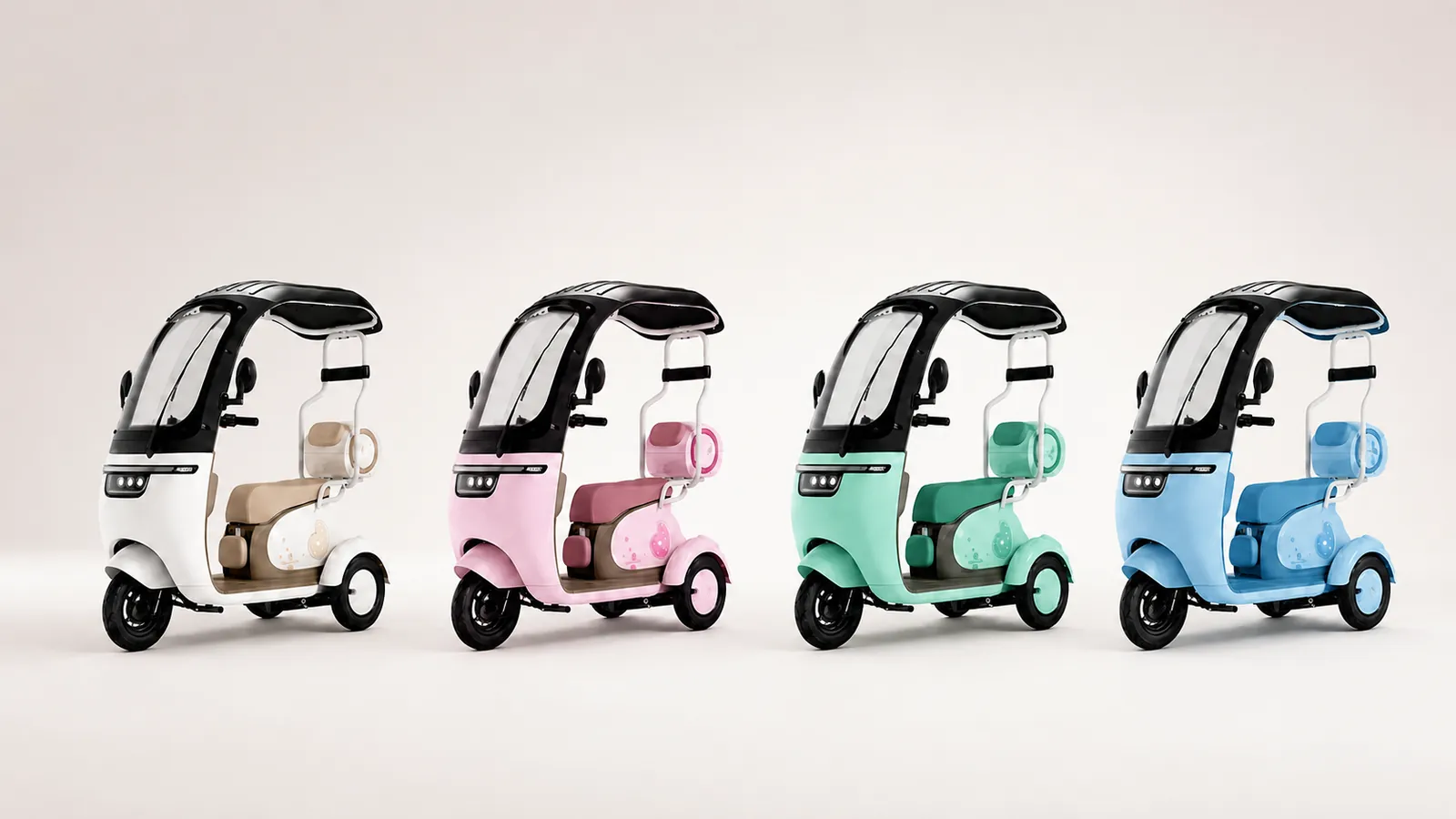
- Electric passenger tricycle: community transport, tourism and family mobility; check seating, stability, doors, weather protection, lighting and reverse operation.
2. Start with the application and operating environment
Before requesting a price, tell the supplier the destination country and port, application, daily distance, total rider/passenger/cargo weight, road gradients, surface conditions, climate, rain exposure, registration requirements and expected annual demand. The same vehicle that performs well on flat urban roads may be unsuitable for hills, rough roads, heavy loads or sustained high temperatures.
3. Specify the motor, controller and brakes as one system
Do not compare a single peak-power number. Confirm rated and peak power, controller rated and maximum current, motor type, wheel size, transmission, loaded gradeability, sustained temperature performance, wiring and braking. A larger motor does not create a reliable vehicle when the battery, controller, harness, chassis, tyres and brakes are not matched to it.
Power ranges shown in catalogues are screening references, not proof that a vehicle is legal or suitable in a destination market. Final selection must follow the applicable vehicle category, actual payload and operating conditions.
4. Compare battery energy, traceability and test conditions
For energy comparison, use Wh = nominal voltage × Ah. For example, 60V × 20Ah is 1,200Wh, while 72V × 32Ah is 2,304Wh. Watt-hours make cross-voltage comparisons more meaningful, but they still do not guarantee range.
Ask for cell and pack manufacturer information, chemistry, nominal voltage and capacity, BMS protections, continuous and peak discharge current, charger specifications, enclosure design, temperature limits, serial-number traceability and documents matching the exact pack. Compare promotional range only after the supplier states load, speed, terrain, temperature, tyre pressure, start-stop pattern and battery used in the test. Cargo-tricycle buyers should prioritise loaded range.
5. Add tricycle-specific engineering checks
For cargo vehicles, request rated payload, test payload, loaded braking evidence, loaded hill-start or climbing results, frame and tube information, rear-axle model, differential, suspension, track width, turning radius and parking-brake performance. Provide the real cargo dimensions because parcels, vegetables, beverages, gas cylinders and cold-chain loads require different bodies and restraints.
For passenger vehicles, review the intended passenger count, centre of gravity, seating and access, weather protection, lighting, reverse warning and local rules for passenger transport.
6. Confirm compliance before approving the configuration
A generic CE document is not a universal road-registration approval. The destination country, vehicle category, maximum speed, rated power, dimensions, use and battery configuration determine the applicable route. In the European Union, Regulation (EU) No 168/2013 defines L-category powered two- and three-wheel vehicles and their type-approval framework. Other markets use their own registration, conformity and import systems.
Ask which exact model and configuration a certificate or test report covers, verify the issuing or testing body, and confirm current requirements with the destination authority or qualified local adviser before ordering.
7. Verify the supplier and approved sample
- Match the legal company name, business registration, contract entity, invoice and bank-account beneficiary.
- Use a live video call or visit to inspect products, quality-control points, packing and inventory where practical.
- Request model-specific test reports and photographs; do not accept certificates for another vehicle or battery.
- Approve a sample or pilot order and freeze a written specification before bulk production.
- Define inspection criteria and change-control rules so the bulk order matches the approved configuration.
8. Compare the complete quotation and contract
Separate the base vehicle, battery, charger, optional equipment, OEM work, spare-parts package, packing, inland transport, documentation and freight. Record model, colour, motor, controller, battery, charger, brakes, tyres, payload, packaging, quantity, lead time, inspection, warranty and after-sales procedure in the pro forma invoice or contract.
State the chosen Incoterms® 2020 rule with the named place or port. Incoterms allocate delivery obligations, costs and risk; they do not replace a complete sales contract, product specification or payment terms.
9. Check lithium-battery shipping before production finishes
Confirm whether batteries ship installed, packed with the vehicle or separately; whether the planned carrier accepts that configuration; and whether the applicable UN 38.3 test summary, safety data and packaging information match the actual battery. UNECE’s Manual of Tests and Criteria contains the UN 38.3 test framework, while carrier-specific and mode-specific requirements must be checked before booking.
Also confirm rust and moisture protection, crates or frames, SKD/CKD part numbering, assembly instructions, container quantity and any destination packaging requirements. Early carrier review reduces the risk of completing production before learning that a shipment cannot be accepted as planned.
10. Plan spare parts and after-sales before the first order
Request user and service manuals, wiring diagrams, fault information, a parts catalogue, serial-number tracking, warranty coverage and a written claim process. A first commercial order should include an agreed package of high-use parts such as controllers, chargers, displays, switches, lights, brake components, harnesses, tyres and selected body panels.
RFQ checklist for overseas buyers
- Destination country, city and port
- Vehicle type and application
- Road, gradient, climate and water-exposure conditions
- Total payload, target speed and required real-world distance per charge
- Battery chemistry or service preference
- Registration, certification and document requirements
- Sample, pilot and annual quantities
- CBU, SKD or CKD delivery; OEM colour, labels and packaging
- Named Incoterms® 2020 rule and requested delivery date
Frequently Asked Questions
What should a buyer provide before asking for a quotation?
Destination, use case, roads, payload, speed, real-world range, climate, battery, compliance, quantity, delivery format and trade term.
Should battery capacity be compared in Ah or Wh?
Use Wh for cross-voltage energy comparisons, then evaluate range under stated operating conditions.
Is a CE document enough for every market?
No. Approval and registration depend on the exact vehicle category, configuration and destination.
What should be checked before lithium-battery shipping?
Battery identity, the applicable UN 38.3 test summary, transport documents, packaging and carrier acceptance.
How can a first order reduce risk?
Verify the supplier, freeze the written specification, test a sample or pilot batch, inspect, include spare parts and document warranty procedures.
Sources and scope
- EUR-Lex: Regulation (EU) No 168/2013 on L-category vehicles
- UNECE: UN Manual of Tests and Criteria, Revision 8
- IATA: Battery Shipping Regulations
- International Chamber of Commerce: Incoterms® 2020
This guide is a sourcing checklist, not legal, customs, certification, engineering or dangerous-goods advice. Rules vary by country and can change. Verify the current requirements for the exact vehicle, battery, destination and transport mode before ordering or shipping. Product visuals supplied by Guangxi Xinli New Energy.