2026 Global Electric Two- and Three-Wheeler Export Market Update
· Ainne Zhang — Operations Director
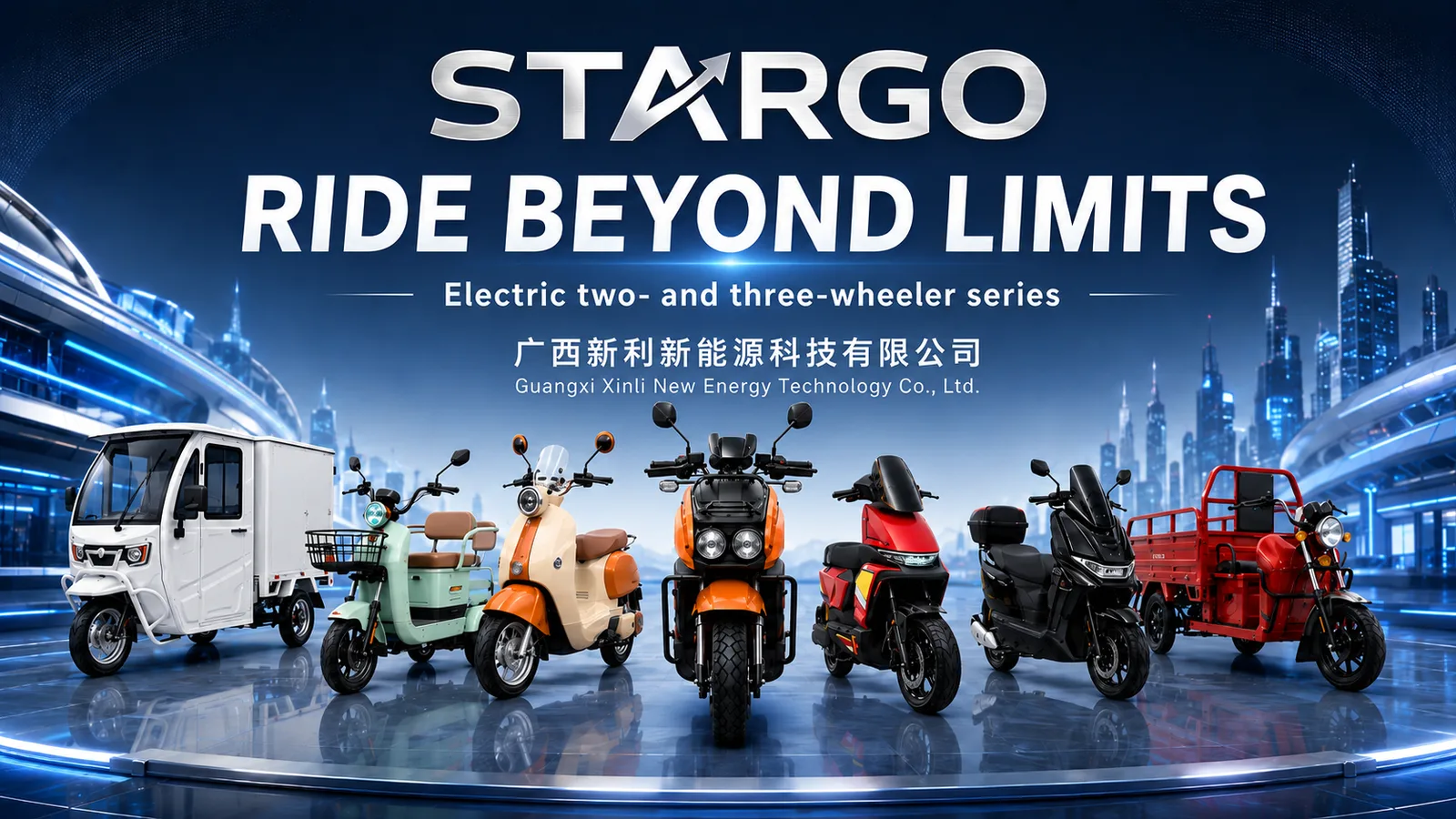
China exported about 7.2 million electric two-wheelers in Q1 2026, up 68.2% year on year. This bilingual market update explains where demand is growing and why product compliance, battery documentation, spare parts and localization now matter as much as price.
China | August 10, 2026. Electric two- and three-wheelers are entering a new export cycle. Publicly reported customs data show that China exported more than 26.7 million electric two-wheelers in 2025, worth about USD 6.83 billion. In Q1 2026, volume reached approximately 7.2 million units, up 68.2% year on year.
Market snapshot: Xuzhou electric-tricycle exports reached RMB 168 million in the first four months of 2026, up about 87% year on year. The figures describe one major production hub, not all Chinese tricycle exports.
Two-wheelers: Southeast Asia remains a core growth engine
Demand is being shaped by dense urban commuting, fuel-cost sensitivity, delivery work and national electrification programs. Export models are moving beyond entry-level transport toward higher power, longer range, connected features, removable or swappable batteries and better protection for hot, humid and rainy conditions.
For distributors, the practical question is no longer simply which model is cheapest. Battery availability, spare-parts continuity, local charging conditions, registration class and after-sales response determine whether a product remains commercially viable after launch.
Three-wheelers: commercial use cases are expanding
Electric cargo and passenger tricycles are increasingly evaluated for last-mile delivery, agriculture, industrial parks, short-distance passenger transport, sanitation and mobile retail. Buyers typically focus on payload, gradeability, chassis durability, braking, rear-axle design, cargo-box dimensions and container-loading efficiency.
Lead-acid and lithium configurations can both remain relevant in emerging markets. The right choice depends on acquisition budget, duty structure, charging access, route length and the local ability to service batteries.
Regional opportunity map
- Southeast Asia: commuter scooters, electric motorcycles and swappable-battery models; success depends on localization, service coverage and hot-weather durability.
- Latin America: long-range two-wheelers and cargo tricycles; landed cost, exchange rates and local-assembly policy need early review.
- Africa: commercial motorcycles and cargo or passenger tricycles; financing, road durability and charging or swapping access are decisive.
- Middle East: higher-power motorcycles, cargo tricycles and site vehicles; heat, dust, certification and distributor capacity matter.
- European Union: compliant L-category vehicles and selected premium niches; e-bike trade duties, type approval and battery rules require separate analysis.
Europe: classify the vehicle before choosing a compliance path
The European Commission extended anti-dumping and countervailing duties on electric bicycles from China in January 2025. Those measures apply to the e-bike category and should not be generalized to every electric motorcycle or powered tricycle.
Electric mopeds, motorcycles and powered tricycles classified as L-category vehicles are governed centrally by Regulation (EU) No 168/2013. Before quoting, exporters should confirm the vehicle category, maximum speed, rated and peak power, seating and intended use, then map the correct type-approval and Certificate of Conformity pathway.
Battery compliance is now a market-entry capability
Regulation (EU) 2023/1542 covers batteries for light means of transport. Article 77 requires an electronic battery passport from 18 February 2027 for each LMT battery, each industrial battery above 2 kWh and each EV battery placed on the EU market or put into service.
Transport rules are also tightening. Lithium batteries must pass applicable UN 38.3 tests and a test summary must be available. IATA guidance states that, from 1 January 2026, relevant lithium-ion batteries packed with equipment and battery-powered vehicles offered for air transport must use a reduced state of charge, subject to the applicable packing instruction and any State approvals.
What export teams should prepare in 2026
- Classify the vehicle before quoting: e-bike, moped, motorcycle or powered tricycle.
- Confirm destination-market registration, top-speed, power, labeling and import-duty rules.
- Prepare battery chemistry, voltage, capacity, energy in kWh, UN 38.3 test summary, SDS/MSDS, charger and basic BMS information.
- Standardize tricycle payload, gradeability, brakes, rear axle, cargo dimensions, tires, range, container loading and spare-parts kits.
- Define warranty scope, wear parts, remote technical support and distributor training during quotation.
Frequently Asked Questions
How fast did China's electric two-wheeler exports grow in Q1 2026?
Reported volume was about 7.2 million units, up 68.2% year on year.
When does the EU battery-passport requirement apply to LMT batteries?
The key date in Article 77 is 18 February 2027.
Is one CE certificate enough for every vehicle?
No. Classification and destination-market rules determine the required conformity route.
Sources and scope
- China News Service / ECNS: 2025 two-wheeler exports and Xuzhou tricycle data
- China Economic Net: Q1 2026 electric two-wheeler exports
- European Commission: e-bike trade measures
- EUR-Lex: Regulation (EU) No 168/2013
- EUR-Lex: Regulation (EU) 2023/1542
- IATA: Battery Shipping Regulations
This article is market information, not legal, tax or customs-classification advice. Verify HS codes, tariffs, road access, certification and dangerous-goods requirements for each destination, configuration and transport mode.