Inside STARGO's Factory: How Six-Stage Quality Control Works
· Ainne Zhang — Operations Director
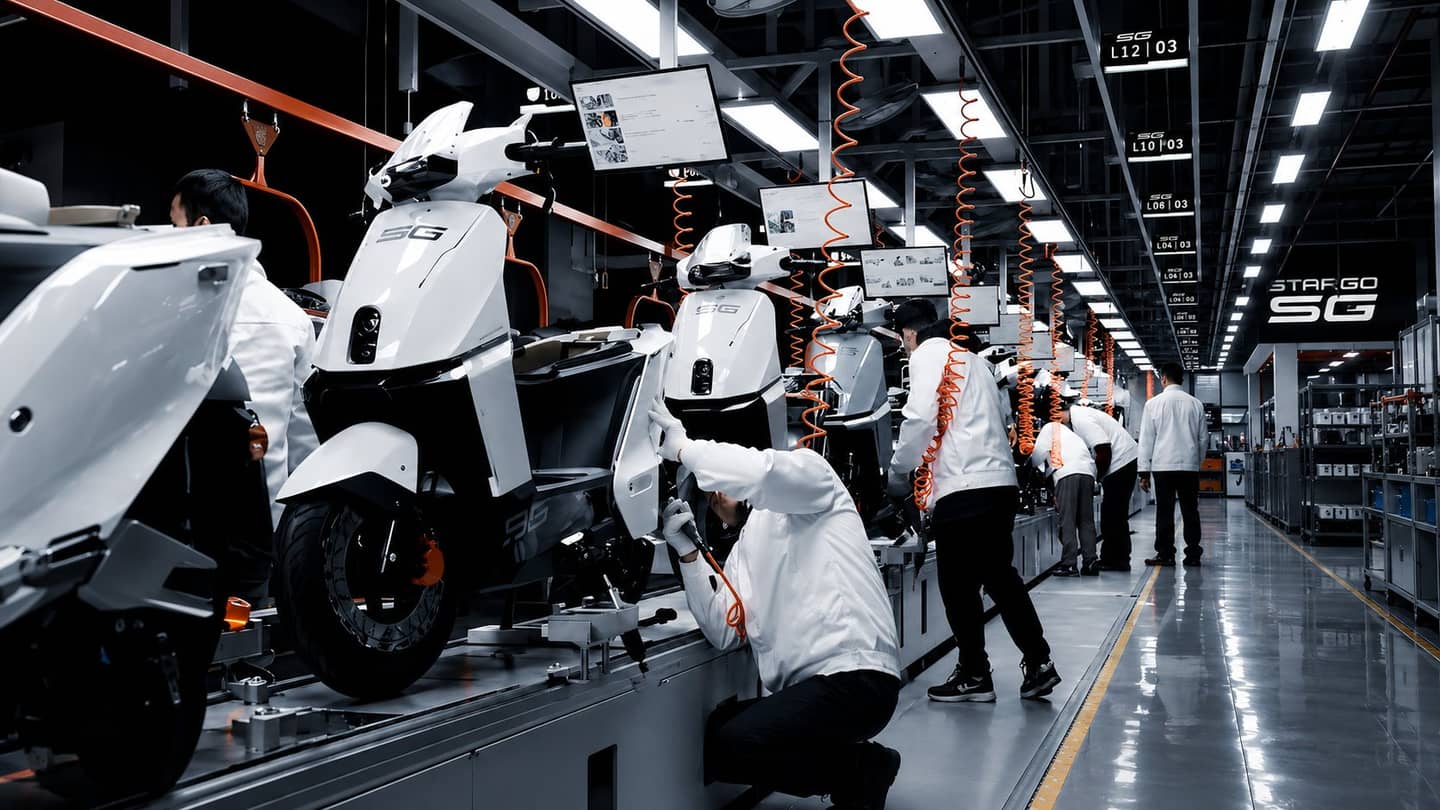
How STARGO inspects every order—from incoming parts inspection to road testing and the PSPV buyers confirm before paying the balance.
Contents
- The six inspection gates
- PSPV: the buyer's acceptance gate
STARGO assembles electric two-wheelers in Guigang and electric tricycles in Chongzuo, Guangxi, with battery packs and BMS built in-house. Quality is controlled through a six-stage flow that every order passes before it ships.
The six inspection gates
01 Incoming parts inspection — motors, controllers, batteries, frames and electrical components are checked against specification before entering the assembly line. 02 Frame assembly — frame dimensions, weld integrity and mounting points are verified. 03 Battery and motor installation — pack seating, BMS connector integrity and motor alignment are confirmed. 04 Electrical system testing — lighting, display, controller and wiring are tested as a system. 05 Road testing — vehicles are ridden under real conditions before packing. 06 Pre-shipment QC — a final inspection before container loading.
PSPV: the buyer's acceptance gate
Every container is then documented with a pre-shipment production video (PSPV). Under STARGO's 30%–50% T/T deposit terms, the buyer confirms this video before paying the balance — giving both sides a shared acceptance reference at the loading stage.
For OEM/ODM partners building their own brands on STARGO platforms, this process means reorders match the original specification and after-sales cases stay predictable. Dealers can request a live video factory tour to see the process directly.